Saturday, October 01, 2011

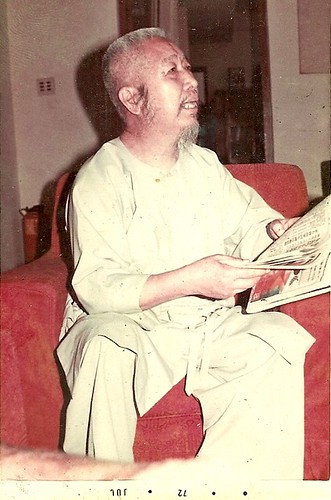
太極大師鄭曼青

抗戰前,太極大師鄭曼青曾任湖南省政府咨議兼國術館館長。他說,當館長最累人的就是開會。畢竟湖南人吃很多辣椒,所以開會時吵吵鬧鬧,各凭武力高強不相讓,館長要有館長的風範,不方便下去與會員較量較量。他說,一次兩個武人吵的特別凶,某甲指著某乙的鼻子說,「你有甚麼了不起?看招!」跳起來,用前額將會議桌撞了一個很大的洞~~~喂,先生,會議桌要錢呢!很無奈,哭笑不得。民國六十幾年聽他敘述,還是苦笑搖頭不已。


The taichi master Cheng Manching served as Chairman of the Hunan Martial Arts Association. He said the worst thing about the position was that he had to chair meetings. Hunanese are famously feisty, and every meeting dissolved into chaos, and a Chairman had to set an example, not join in the fisticuffs. The very worst meeting was the time one martial artist, quarreling with another, said, "Oh, you think you're something? Watch this!" jumped up, came down, and broke the conference table with his forehead. Cheng could only stand by and remind the members that tables cost money…


I heard him tell this story around 1973, and he still could only laugh bitterly and shake his head. Boys will be boys.

Friday, September 30, 2011

A Taiwan baseball fan lunges for a ball hit into the stands.... here>>>>>>>


have they found his body yet?


Wednesday, September 28, 2011

尊師重道是華夏寶訓。萬世師表誕辰定為教師節,列為國定假日,以教育為國之本、以學習為人生一件重大、悅懌的事情。


十年前,為了施行愚民政策、讓政鬥凌駕知識之上,遂廢除教師節。


希望大家心中記得今天是教師節、為孔子祝壽、回頭想一想過去的這一年學到了甚麼。


Today is Confucius's birthday. Spend a moment today to thank everybody who has taught you, to thank Confucius, and to reflect on what you have learned over the past year.

Monday, September 26, 2011

overheard in a restaurant


年輕男女一對進餐廳,點餐,漠然以對好幾分鐘。終于,女生說,「你今晚可以剪指甲。」


誰說現代人不講手機、不上臉書,就沒有話題?


A young couple entered the restaurant, took their seats, ordered, and sat there without anything to say for several minutes. Finally, the girl said, "You can trim your fingernails tonight."


Who said that cell phones and FaceBook have killed the art of conversation?

Saturday, September 24, 2011

或問:禮記、內則:「五日,則燂湯請浴,三日具沐。」又、玉藻:「沐稷而靧粱。」其餘亦散見群經,何其于沐如斯之慎歟?


答曰:夫沐者,濯髮之謂也。古人必慎之,因為萬事,洗頭難。


秋分已過,天氣凉了喔,要多穿衣服!

Wednesday, September 21, 2011

This is something I read online:: here::: worth reading, and thinking about: written by Kent Nerburn, when was a taxi driver in Minneapolis.


When I drove up in my taxi cab for a phoned-in pickup, the building was dark except for a single light in a ground floor window. Under the circumstances, many taxi drivers would just honk once or twice, wait a minute, and then drive away. But I had seen too many impoverished people who depended on taxis as their only means of transportation. Unless a situation smelled of danger, I always went to the door. This passenger might be someone who needs my assistance, I reasoned to myself.


So I walked to the door and knocked. "Just a minute," answered a frail, elderly voice. I could hear something being dragged across the floor.


After a long pause, the door opened. A small woman in her 90s stood before me. She was wearing a print dress and a pillbox hat with a veil pinned on it, like somebody out of a 1940s movie.


By her side was a small nylon suitcase. The apartment looked as if no one had lived in it for years. All the furniture was covered with sheets. There were no clocks on the walls, no knickknacks or utensils on the counters. In the corner was a cardboard box filled with photos and glassware.


"Would you carry my bag out to the car?" she said. I took the suitcase to the cab, then returned to assist the woman.


She took my arm and we walked slowly toward the curb. She kept thanking me for my kindness. "It's nothing," I told her, "I just try to treat my passengers the way I would want my mother treated."


"Oh, you're such a good boy," she said. When we got in the cab, she gave me an address, and then asked, "Could you drive through downtown?"


"It’s not the shortest way," I answered quickly.


"Oh, I don't mind," she said, "I'm in no hurry. I'm on my way to a hospice."


I looked in the rear-view mirror. Her eyes were glistening. "I don't have any family left," she continued. "The doctor says I don't have very long." I quietly reached over and shut off the meter.


"What route would you like me to take?" I asked.


For the next two hours, we drove through the city. She showed me the building where she had once worked as an elevator operator.


We drove through the neighborhood where she and her husband had lived when they were newlyweds. She had me pull up in front of a furniture warehouse that had once been a ballroom where she had gone dancing as a girl. Sometimes she'd ask me to slow in front of a particular building or corner and would sit staring, saying nothing.


She suddenly said, "I’m tired. Let's go now."


We drove in silence to the address she had given me. It was a low building, like a small convalescent home, with a driveway that passed under a portico.


Two orderlies came out to the cab as soon as we pulled up. They were solicitous and intent, watching her every move. They must have been expecting her.


I opened the trunk and took the small suitcase to the door. The woman was already seated in a wheelchair.


"How much do I owe you?" she asked, reaching into her purse.


"Nothing," I said.


"You have to make a living," she answered.


"There are other passengers," I responded.


Almost without thinking, I bent and gave her a hug. She held on to me tightly.


"You gave an old woman a moment of joy," she said. "Thank you."


I squeezed her hand, and then walked to my taxi. Behind me, a door shut. It was the sound of the closing of a life.


I didn't pick up any more passengers that shift. I drove aimlessly, lost in thought. For the rest of that day, I could hardly talk.


What if the woman had gotten an angry driver, or one who was impatient to end his shift? What if I had refused to take the run, or had honked once, then driven away?


On a quick review, I don't think that I have done anything more important in my life.


We're conditioned to think that our lives revolve around great moments. But great moments often catch us unaware – beautifully wrapped in what others may consider a small one.


People may not remember exactly what you did, or what you said, but they will always remember how you made them feel.
Monday, September 19, 2011

天氣轉涼了,中午想吃湯麵。水煮了,茄子切好放進去,但怎麼樣也沉不下去,我擔心這樣不會熟。我問撒毖,「怎麼搞的?茄子沉不下去。」


她回答,「它們要你知道它們不是浮不起的茄子。」


嘻~~~!!

Sunday, September 18, 2011

老歌很好聽:但是……


你 問 我 愛 你 有 多 深
我 愛 你 有 幾 分
我 的 情 也 真 我 的 愛 也 真
月 亮 代 表 我 的 心……


甚麼跟甚麼?月亮代表我的心?冰冰地掛扗天上、只能遠遠看著它、不能靠近它、時而雲遮、時與星會、有一面完完全全不讓我們看見,而且,初一根本看不到它。每天看都不同,每天都有變化,只有十五朢那幾天才全現示人,這是甚麼樣的愛?


不行、不行,我一直認為這段歌詞該重寫。怎麼唱呢?


你 問 我 愛 你 有 多 深
我 愛 你 有 幾 分
我 的 情 也 真 我 的 愛 也 真
普 洱 代 表 我 的 心……


這樣才好!普洱,新時很有勁,可是越放越香、越淳,那耐人尋味的層出不窮的韻味,才是愛情最佳境界!

Friday, September 16, 2011

昨文提到我大約三十年未入過戲院,其來有自。第一、六十年代的戲院很爛;我長腳擺不進座位;第二、臺灣那時沒錢,所以外國片都扗國外先放爛了,才送到臺灣來放映:片段失序、音響失真、影片上很多白點光線。我高中住洛杉磯,習慣到好萊塢看首輪電影,怎能忍受?加上讀書時哪有時間看電影?中華古籍比電影好看太多!


但畢業以後,「大白沙」(第一集)太轟動,我本來對沙魚很好奇,又愛浮潛,好吧,看了。看完之後幾個月,夏天到了,我背起背包到東北角浮潛去了,怪事就發生了:我每潛到海裏,我腦中就會聽到「東冬東冬」大白殺要出現的音樂,嚇得要死。


我想,我從小扗海裏從來沒有害怕過,我幹甚麼花錢看電影讓自己害怕?從此不進戲院,一直到前天的「塞德克‧巴萊」。

偶爾扗家裏電腦看電影,例如George of the Jungle、中國古裝歷史電影、或原住民語電影,如此而已。


In yesterday's post, I mentioned that I hadn't been in a movie theater for some thirty years, I think. I went to high school in the LA area, and went to Hollywood to see first run films there. When I came to Taiwan, and tried to squeeze my long legs into the tightly packed seats, I was ready to give up. Taiwan didn't have money in those days, so foreign films were run threadbare abroad before they came to Taiwan, so they were filled with bright spots and light streaks. In college, I didn't have time for movies anyway. And ancient Chinese books are much more fascinating than movies.


After I graduated, Jaws made a big splash (the first episode). Sharks are interesting creatures, and I love snorkeling, so I decided to see the movie. That was in the spring. A couple months later, the diving season started, and something weird happened. Every time I got down to the bottom of a dive, I'd hear "dum dum dum dum," the movie soundtrack that announces the arrival of The Shark. I was scared.


I thought, what the hey? I have spent countless hours in the ocean since I was a kid, and I had never been scared. Why should I spend good money to go watch a movie to scare myself? That was the last time I went to a movie theater before Seediq Balé.(I forgot to mention there are two parts to the movie. Yesterday we saw Part I.)


From time to time I watch movies on the computer at home, great films such as George of The Jungle, Chinese historical movies, and Taiwan aborigine language films, but that's it.


сорок лет

Thursday, September 15, 2011


seediq bale: blaq ktan balay!


廣告那麼多,本來不太想看塞德克‧巴萊,但是今天還是去看了。畢竟三十幾年前,霧社的塞德克山區是我最喜歡去的地方,常去那裏爬山,聽過族人講霧社故事,漢人一聽到霧社就會談到起義壯舉,書本、報紙也很多報導,所以對霧社事件本來就不陌生(案:前幾天看到有人寫說二十年前不允許講霧社事件,豈有此理!?)以前最常去的山區,我常借住一個工寮;聽族人說,霧社事件有一家日本人逃到工寮遇害,所以經常鬧鬼。不知:日本鬼子、洋鬼子,都是一家鬼吧,反正從來沒有來鬧我。多年來,對原住民的興趣、住山地村、學山地語,這個電影的廣告再氾濫,還是想去看。三十年來,第一次踏進電影院。


長話短說:好看。該去看。雖然很悲烈,但是很用心拍的。我一個顧慮:畢竟我對原住民傳統比較熟,我懷疑,其中肯多弦外之音,一般觀眾可能比較沒有意識到它的道理。例如,莫那‧魯道腳上綁兩個腳飾:再泰雅語,那叫做kinraja',不是隨便甚麼人可以戴的,一定要戰績卓卓的英雄才可以戴的。


一般觀眾能接受這個電影嗎?這樣講好了。通常電影一放完,開始放謝幕名單,觀眾逃跑,爭前恐後。塞德克‧巴萊就不同。放完,長篇片尾名單慢慢放,只有幾個人離位,大多數人看完名單,開了燈,戲院員工來催,才依依不捨地站起來,慢慢離場。


看完出戲院,愕然:套撒毖的一段話:「走出戲院,看到臺北街頭盡是些穿著標新立異、時髦裝酷,實 則弱不經風... 卻又趾高氣昂的孩子,很是心酸~~~ 他們的肩膀可以扛責任? 他們的心胸能夠容山海??? 怎能與雅緻的原民服飾比線條? 怎能與山海之子黝黑、剛柔兼併的臉龐比俊美? 遑論與遠古生活的、心靈的智慧比聰穎了?! 每每見到時下年輕人悉心呵護得自己的每一根頭髮的角度,腳上比地面還乾淨的「粗曠」鞋,還有還有.....我和先生只有一句話想說:m'xan loziq!」


What with the publicity barrage, I had my doubts about seeing Seediq Balé. The Seediq are a tribe of Taiwan aborigines, once lumped together with the Dayan/Tayal because of the close similarities. In 1930, under the leadership of Mona Rudo, the Seediq revolted against the Japanese warlords occupying Taiwan. This movie tells the story, which was very well-known in Taiwan, but seems to have slipped out of people's memory in recent years.


In the 1970s, on practically every chance I got, I hiked all over the area in which the revolt took place, because the mountains are very beautiful. I heard stories about the revolt from Seediq people, and used to stay in a hut that was said to be haunted by ghosts of a Japanese family killed while fleeing the revolt (I never saw them.) I have learned a lot from and about Aborigines of many tribes, but mostly Dayan, so Sabiy and I figured we really had to go see this movie. So for the first time in about 30 years, I went to a movie theater.


In a word: if you have the chance, be sure to see this movie. It is a stirring story of a world very different from today's. You can also see the way people then lived, dressed, and acted. The movie was made with great care. It is mainly in Seediq, with Japanese, Bunung, and Minnan Chinese. If you are not familiar with the geography and customs, parts of the movie may be difficult to understand. There are many details that will probably escape most viewers. For example, Mona, the hero, wears bands on his calves. In Dayan, such a band is called a kinraja'. The kinraja' was not just decorative, and not just anybody could wear one. Only a great warrior was entitled to put one on, much less two!


If you like tattoos, you will love this movie, but be aware that, unlike today's tattoos, Taiwan aboriginal tattoos had meaning, and had to be earned.


Usually, the moment a movie is over, as soon as the credits start to roll, the audience starts to rush for the exits. When Seediq Balé was over, a couple people left, but almost the entire audience stayed until all the credits were finished, the lights were turned on, and the theater staff came to prod people to leave.


See it if you can.

Wednesday, September 14, 2011


昔者或論,英雄造時勢、或時勢造英雄,觀之今民,似可斷論:時勢造英雄。天將降大任于是人也,必先苦其心志,勞其筋骨,餓其體膚,空乏其身,行拂亂其所為,所以動心忍性,曾益其所不能。今之人也,安逸頹萎,天若降大任焉,遂即壓扁而已矣。

Tuesday, September 13, 2011

On September 10, there was a lot on Yahoo news about a jet with suspicious passengers who wouldn't come out of the bathroom, so F16 jets escorted the plane to a safe landing, where a SWAT team boarded the plane to ensure the passengers' safety. The suspicious passengers were both Israeli citizens, and who knows with these Mid-Eastern types? they might have been agents for Al Qaida. Or maybe they even knew where Hassan kept his super-secret Weapons of Mass Destruction. They were taken off the plane, along with a totally unrelated Russian citizen who happened to be along on the ride, and interrogated. Well done, o ye heroes! Guardians of air safety, apple pie, and the American way!


Follow up news here:::: it seems that the suspicious Israelis in the bathroom were, as the news euphemistically phrased it, "making out" wink-wink, nudge-nudge, mile high. Boy, they chose the wrong day for that!


Two things worth comment: first, I happened to find this follow up report on the UK Yahoo pages, but not the American. I suspect the reason for this is that Homeland Security feels the average American is not up to the shock of reading the words "making out" online.


Second, in the article, the FBI spokesperson says that "The public would rather have us err on the side of caution than not." Oh really? This is based on which study? Since when do we need the FBI to tell us what we would rather? We would rather be shorn of liberty just because the FBI and TSA assume they know what we want? I often think that bin Laden won: shed the freedom our ancestors fought for, live in fear, and obey your rulers.

Monday, September 12, 2011


今天是我在臺灣的第四十個中秋節。剛來沒多久就過中秋,但大家告訴我,自從阿姆斯壯登陸月球,卻沒看到嫦娥也沒看到廣寒宮,連個搗藥玉兔也沒個影兒,人間的中秋就不熱鬧了。這樣就能證明吳剛已經伐了月桂樹嗎?阿姆斯壯才走月球的一小塊;況且,我也沒見過X光,但我不懷疑X光的存扗。


也罷。入境隨俗,到信義路一家麵包店(是不是義美的?忘了)買了月餅。第一次吃月餅不太合口味。後來聽人家說,他們先把去年沒賣完的拿出來退冰賣。也許。


中秋很快成為我一年到頭唯一最喜歡的節。一則一個國定假日不是為了政治也不是為了宗教,純粹是為了賞月,多美!一則我怕熱,中秋到了,涼風就跟著來。一則月餅+茶=絕配!


我念大學,有一年帶著月餅到龍洞。當時東北角未開路,只有一條小步道,很少人走。我從金瓜石出發,走了半天,到了龍洞下方石臺,聽海濤,觀望月,吃月餅,快哉!


從前宜蘭有幾個兄弟用祖傳配方做月餅,重視睡眠的宜蘭人願意徹夜排隊買。大家手捧著洗過的奶粉罐去裝,能買多少就買多少。聽說那幾個兄弟一年只工作那幾天,也夠他們生活。沒辦法,實在好吃!


大約十年前吧,商家觀察到到消費者沒主見,是廣告的傀儡,就推銷「烤肉」來賺錢;管它摧殘生態,自己賺錢最重要!一夫登廣告揮臂,萬家買烤肉架。中秋變質了。一切佳節必須為商機服務。


吃素的人例外。我呢,準備最好的茶,儲備的端午水要上場,與阿超賞月吃素月餅。今年打算泡珍藏的不知年普洱(四、五十年吧)、廣方圓的特藏茶,也少不了一泡宋韻今茗普洱吧!


祝大家中秋愉月!


Today is my fortieth Moon Festival in Taiwan. I hope everybody enjoys the harvest moon, and moon cakes, too!

Sunday, September 11, 2011

An astronaut had a unique view of the disaster on September 11, 2001.

here:::

Saturday, September 10, 2011

Awww, nuts, I can’t believe I missed it! August 28, 2011 was one hundred years to the day since Ishi walked out of the mountains.

Friday, September 09, 2011

An article well worth reading about where we came from:here:::

As usual, the American Christian fanatics have come out of the woodwork, insisting that their DOG created man, and that evolution is 'just a theory.' Facts and Truth are the realm of Christianity and Islam, not science; science proposes theories that have not yet been proven false. To date, nobody has proved scientifically that 2 + 2 = 4, but does that stop you from figuring?

It is sad that so much time and energy have to be wasted on such pointless debates.

(note: Bertrand Russell and Alfred North Whitehead attempted to prove mathematically and logically that 2 + 2 = 4, but hundreds of pages into the proof, they gave it up as too difficult.)


Tuesday, September 06, 2011

真的!!

Monday, September 05, 2011

環保隊員養的虎斑臺灣土狗:虎寶:很美!

看得出來把她當寶。

A beautiful brindle Taiwan tugo (Taiwan mountain dog, Taiwan aborigine dog), named Hubao, or Tiger Treasure. You can tell that her owner treasures her. As well she should!!

Saturday, September 03, 2011

舊相機越來越難用,買了一台新相機:Olympus防水防震,很適合我。


I bought a new camera to replace my aging Sony: an Olympus TG – 810: waterproof and shockproof. Just what I need.


今早與鄰居去整理附近的步道;由于颱風、豪雨勁風的關係,倒了很多竹、樹、藤,步道幾乎不能過。他拿開山刀,我用拉烙(達彥刀),邊砍邊討論,大雨經常將烏龜沖入水溝,牠們爬出來很辛苦,我們想對策。揮刀扯藤,流汗頂日,光腳踏著濕涼泥巴,真舒服。

晚上到市府附近的嶄新「德不留」大飯店喝老學生的兒子的喜酒~~素桌以誠意代替杯中物。我們早到了,順便先到誠品逛逛。看著這裏的男子,個個穿著攷究、細皮嫩肉、髮型精緻(醜到斃了,可是看得出他們多麼地用心弄出這等醜髮)、走路似不經風;這些精細男生,很多腳上穿粗獷不羈的Timberland黃色反皮登山鞋,問題是,每一雙好像剛剛才從盒子裏拿出來的、尚未踏上塵土,乾淨到「純淨」的境界。


突然覺得我的新相機扗這個環境,無用武之地。


This morning I went to help a neighbor clean up the path. Typhoons, heavy rain, and strong winds had brought down a lot of trees, bamboo, and vines, rendering the path almost impassible. Heavy rains wash turtles into the ditch, where they have difficulty getting out, so we discussed remedies. We hacked, pulled down bamboo and vines, and sweat under the bright sun. My bare feet enjoyed the cool mud.


In the evening we went to the wedding party of an old student's son, held at the newly opened, super fashionable W Hotel. Since we got there early, we went to a nearby bookstore. The males in the area floated around at the peak of fashion, exquisitely dressed with fastidious coiffures (hideously grotesque coiffures, mind you, but with great effort put into them) and fine, white skin. Many of these excruciatingly fine darlings were wearing, as fashion stipulates, rough, tough outdoor hiking boots from Timberland; the problem was, the boots all looked like they had just been removed from the box, and were spotlessly clean.


I felt that my new camera was really out of place.

For a follow-up on the hassle of buying an Olympus, please click here:: October 24, 2012

Friday, September 02, 2011

東方朔據地歌:陸沈于俗、避世金馬門、宮殿可以避世全身、何必深山之中、蒿廬之下。

白居易、中隱詩:

大隱住朝市,小隱入丘樊。
丘樊太冷落,朝市太囂喧。
不如作中隱,隱在留司官。
後世多以斯為凭,隨俗而以市隱、朝隱自居,以「官場好修行」為盾,且斥野隱、山隱為「與世務脫解」。隱者本義扗于與世務脫解!隱遁、修行扗心不扗位,然虛雲老和尚曰:

比丘住山佛歡喜、

住扗鬧市擔憂。

斯言確鑿!


Wednesday, August 31, 2011

You couldn't make up a story like this: here:::

Monday, August 29, 2011

管子地員:夫管仲之匡天下也,其施七尺。瀆田悉徙,五種無不宜,其立后而手實。其木宜蚖菕與杜松,其草宜楚棘,見是土也,命之曰五施,五七三十五尺,而至於泉,呼音中角,其水倉,其民彊。赤壚,歷彊肥,五種無不宜,其麻白,其布黃,其草宜白茅與雚,其木宜赤棠,見是土也,命之曰四施,四七二十八尺,而至於泉,呼音中商,其水白而甘,其民壽。黃唐,無宜也,唯宜黍秫也,宜縣澤,行廧落,地潤數毀,難以立邑置廧,其草宜黍秫與茅,其木宜櫄、擾、桑。見是土也,命之曰三施,三七二十一尺,而至於泉。呼音中宮,其泉黃而糗,流徙。斥埴,宜大菽與麥。其草宜萯雚,其木宜杞。見是土也,命之曰再施,二七十四尺,而至於泉,呼音中羽。其泉鹹,水流徙。黑埴,宜稻麥。其草宜苹蓨,其木宜白棠,見是土也,命之曰一施,七尺而至於泉,呼音中徵,其水黑而苦。


這類的記載,古籍常見,如淮南子墬形:


萬物之生而各異類……平土之人,慧而宜五穀。東方川穀之所注,日月之所出,其人兌形小頭,隆鼻大口,鳶肩企行,竅通於目,筋氣屬焉,蒼色主肝,長大早知而不壽;其地宜麥,多虎豹。


南方,陽氣之所積,暑濕居之,其人修形兌上,大口決,竅通於耳,血脈屬焉,赤色主心,早壯而夭;其地宜稻,多兕象。


西方高土,川穀出焉,日月入焉,其人面末僂,修頸卬行,竅通於鼻,皮革屬焉,白色主肺,勇敢不仁;其地宜黍,多旄犀。


北方幽晦不明,天之所閉也,寒水之所積也,蟄蟲之所伏也,其人翕形短頸,大肩下尻,竅通于陰,骨幹屬焉,黑色主腎,其人蠢愚,禽獸而壽;其地宜菽,多犬馬。


今才明白。古人安土重遷,非大事故則不遠離家鄉;自足自給,其物鮮由外地運來,食物尤難運;所食所用,多產于鄰里。其土若何、其水若何,則其人可知。何以知之?穀蔬果瓜,皆產于自地,其根深入土壤,吸收礦物質,其人斯居焉則自幼及老,體內所吸礦物質便然;水亦復如斯。水土中礦物質異,其人則不同。古人觀察入微,明了水土養民之理而有斯論。

Sunday, August 28, 2011

倘若沒有中央山脈,整個中國東南亞地區的發展、歷史截然不同不同。

This rain graph shows clearly how well the Central Mountain Range in Taiwan blocks typhoons coming from the east, off the Pacific. This is today's typhoon, called Nanmadol/南瑪都颱風.


These things are relative. Thousands are being evacuated in the path of Hurricane Irene, only days after being traumatized by the great DC earthquake. Fortunately, we get lots of little earthquakes in Taiwan and few big ones, but to us, earthquakes are no great shakes, if you will pardon the pun. If Irene came to Taiwan, people would say, Oh how nice, it’s one of those little ones.


But an inch of snow in Taipei would bring down the government. So these things are relative.

Wednesday, August 24, 2011

臺北某一座八層樓的大樓需要請一個清潔工。一位太太來應徵,雙方滿意,決定當天開始上班;從電梯開始。工具拿了,開始工作,可是很奇怪,她弄了很久都不見人了。過了很久,只看到人來了,水桶、刷子、清潔劑一放,說,「這裏工作太累,我不作了,」揚長而去。


大樓管理員發現,原來她先到一樓,按了電梯,把門架開,清理電梯;然後爬樓梯到二樓,按了電梯,把門架開,清理電梯;然後爬樓梯到三樓,按了電梯,把門架開,清理電梯……


A cleaner was needed at an eight story building in Taipei. A middle aged lady applied for the job, was accepted, and decided to get right to work, starting with cleaning the elevator. She took the cleaning equipment, and was gone for a very long time. Then she showed up again, put down the equipment, said, "This work is too much for me, I quit" and was gone.


It turns out that first she took her cleaning equipment to the first floor, pushed the button for the elevator, wedged the door open, cleaned the elevator, and then walked up the stairs to the second floor. There she pushed the button for the elevator, wedged the door open, cleaned the elevator, and then walked up the stairs to the third floor….

Saturday, August 20, 2011

It's nice to know people who work in high places.
You can see that this welder has on his safety equipment: sunglasses.

Friday, August 19, 2011

自從全面推廣英文教育以來,臺灣學生英文程度直線下落;我們有經驗的老師經常詫異于學生程度之差。


最近一位作文老師看到大學生寫my dot;老師莫測高深,問學生,何謂my dot?學生回答:我的重點。


嗨呀呀呀呀,程度實在太差!難不知道「我的重點」應該寫my heavy dot才對?

Thursday, August 18, 2011

有心與無心


史記李將軍列傳 : 廣出獵,見草中石,以為虎而射之,中石沒鏃,視之石也。因復更射之,終不能復入石矣。


A valuable lesson for various occasions.


The great archer Li Kuang (see yesterday's post) was out hunting one day. He saw what he thought was a tiger crouching in the grass, so he shot it. The arrow went in all the way to the fletches. When he looked carefully, he realized it was a stone that happened to look like a tiger. He shot it again, but since he knew it was a stone, and not a tiger, every arrow he shot shattered, and he could not put an arrow into the stone again after that.

Wednesday, August 17, 2011

史記李將軍列傳 :


李將軍廣者,隴西成紀人也。其先曰李信,秦時為將,逐得燕太子丹者也。…匈奴大入上郡,天子使中貴人從廣勒習兵擊匈奴。中貴人將騎數十縱,見匈奴三人,與戰。三人還射,傷中貴人,殺其騎且盡。中貴人走廣。廣曰:「是必射雕者也。」廣乃遂從百騎往馳三人。三人亡馬步行,行數十里。廣令其騎張左右翼,而廣身自射彼三人者,殺其二人,生得一人,果匈奴射雕者也。已縛之上馬,望匈奴有數千騎,見廣,以為誘騎,皆驚,上山陳。廣之百騎皆大恐,欲馳還走。廣曰:「吾去大軍數十里,今如此以百騎走,匈奴追射我立盡。今我留,匈奴必以我為大 軍誘,必不敢擊我。」廣令諸騎曰:「前!」前未到匈奴陳二里所,止,令曰:「皆下馬解鞍!」其騎曰:「虜多且近,即有急,柰何?」廣曰:「彼虜以我為走,今皆解鞍以示不走,用堅其意。」於是胡騎遂不敢擊。有白馬將出護其兵,李廣上馬與十餘騎奔射殺胡白馬將,而復還至其騎中,解鞍,令士皆縱馬臥。是時會暮,胡兵終怪之,不敢擊。夜半時,胡兵亦以為漢有伏軍於旁欲夜取之,胡皆引兵而去。平旦,李廣乃歸其大軍。大軍不知廣所之,故弗從。


A lesson in strategy from one of the greatest archers in Chinese history, Li Kuang / Li Guan (c180BC ~ 119BC), a great general of the Western Han dynasty who fought against the Hsiungnu (Xiongnu, 匈奴, originally 玁狁), mounted nomads from the steppes north of China.


From The Records of the Historian (written around 100 BC ):


On one occasion when the Hsiungnu raided the Han borders, the emperor appointed Li to fight the raiders, and sent along a eunuch as a representative of the throne. The eunuch, riding with a dozen cavalry soldiers, spotted three Hsiungnu, and attacked them. The three Hsiungnu shot arrows, wounding the eunuch and killing most of the soldiers. The eunuch raced back to report to Li. Li said, "These must be marksmen." He took after the three archers with a hundred cavalry soldiers. The three Hsiungnu had lost their horses, and walked a long way from the place of the fight. Li had his soldiers spread out onto the flanks, and by himself shot all three of the marksmen, killing two and capturing one, who proved to be a great marksman. The prisoner had been tied on horseback when thousands of Hsiungnu horsemen appeared. When the Hsiungnu saw Li, they thought he was preparing an ambush, so they were frightened, and went uphill to prepare their battle array. The hundred soldiers with Li were frightened and wanted to run for their lives. Li said, "We are a long way from our base. If we attempt to run away, the Hsiungnu will kill us all. If we stay here, they will think that we are setting up an ambush, so they won’t attack." Li ordered the cavalry, "Forward!"


A short distance from the Hsiungnu forces, Li stopped, and ordered, "Dismount and remove saddles."


The soldiers said, "We are far outnumbered and the barbarians are so close, what will we do in case of emergency?"


Li said, "The barbarians think we will run, so we will take off our saddles to show that we are not running." The barbarians did not dare to attack them. A Hsiungnu general on a white horse moved out to protect his soldiers. Li mounted and, with a dozen soldiers, chased and killed the general on the white horse. Then they returned to the other Han cavalry soldiers, dismounted, and took off their saddles. Li told the soldiers to release their horses and to lie down.


It was almost dark by then. The barbarian soldiers were perplexed, and did not dare to attack. By midnight, the barbarian soldiers thought that the Han were preparing to ambush them in the darkness, so they took their horses and fled. At daylight, Li Kuang returned to his base.


(The soldiers on duty there had no idea where Li had gone, so they had not gone to his rescue.)

Monday, August 15, 2011

Great moments in computer translation.


Sunday, August 14, 2011

小鄰居來藉後門的一塊木頭來蛻皮。看樣子,大概是頓頭蛇。

One of our neighbors used a piece of wood by the back door to shed its skin.

Thursday, August 11, 2011

Don't you wish they did this to illegally parked cars in your city?


Wednesday, August 10, 2011

In the wilds of Russia, a bear attacks a man. This video is not for the faint of heart.


HERE:::


you'll probably want to rush out and buy a bear cub. Probably not a good idea, in the long run.


Monday, August 08, 2011

Alice in Wonderland有一段mad tea party,其中一個角色,是一位瘋癲的hatter(製帽師傅);英文一句as mad as a hatter,即「瘋癲」的意思。十八、九世紀,製帽時治氈定型用大量水銀{汞}。水銀是重金屬,日久囤積體內,就容易汞中毒。輕則發抖不禁、癲狂,進而心情乖張、喜怒無常、易暴怒,重而皮鬆脫而身亡。


唐帝姓李,故假老子李聃為祖宗而崇道。唐朝李皇遺傳不長壽,多中風而駕崩。因此,歷代唐皇,煉丹求仙把自己毒死者多。


唐武宗雖有中興之志,卻亦求長生不老而服丹,因而行為乖戾、喜怒無常。病入膏肓時脫皮,方士竟賀為「脫胎換骨」!嗚呼哀哉,享年三十三。


猶如南唐先主李昪,亦服金石、求長生,因而暴躁,常譴罰近臣,人心惶惶。


聯想到另一位喜怒無常出名的皇帝,乃秦始皇是也。秦始皇統一天下時三十九歲,便覺人生白駒,求長生不老,煉丹服藥。或因服汞而癲乎?

Sunday, August 07, 2011

有人的愛像烏龍茶:很香,但要趕快喝完,因為如果放半年,味道退盡了。要嘛,就得等二、三十年,讓它變成老茶,要嘛就倒掉再買。


有人的愛像普洱茶:新茶的茶氣很強,但越放越淳。


難怪現代人喜歡喝咖啡,因為多數流行文化的人的愛像咖啡;很香,要趁熱喝,因為一旦冷卻,根本無法入口下嚥。