臺北小市民生活歷史綴筆
臺北公車聯營之前,站牌距離比較近:反正,其它車不多,走走停停。大家面對面坐。每一個站牌都有售票亭,票亭也賣報紙票夾等等,並售零煙;換言之,香菸可以一根一根買,不必全包買。這種現象似乎早已消失了。
石油危機之前,臺北公車票價一塊五。這個現象我確定是很久以前消失不見的囉!
Wednesday, August 30, 2006
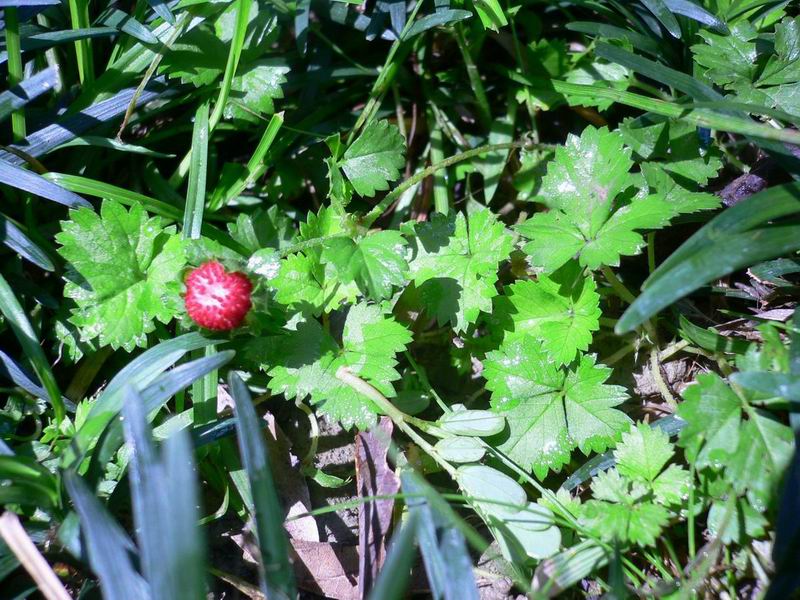 Liluq: 蛇梅 : duchesnea indica (Andr.) Focke
In years gone by, every kid in Wulai knew that the area around what is now my house had the most and tastiest liluq (a kind of wild strawberry). They would get a section of bamboo and a stick that fit in it, fill the bamboo with liluq, and squash the berries into juice with the stick. The juice stained their mouths and chins red.
Liluq still grow here, but Tayal kids don't come to eat them any more. Store bought snacks have taken over.

Tuesday, August 29, 2006
Certain facts of Chinese society never change, regardless of political blathering.
A group of teenage girls probably just entering high school were playing with pigeons in the park, trying to get them to come close, scaring them away.
As I passed by, I heard one say, "I hear these taste really good.”
A group of teenage girls probably just entering high school were playing with pigeons in the park, trying to get them to come close, scaring them away.
As I passed by, I heard one say, "I hear these taste really good.”
Monday, August 28, 2006
Josh's daughter Meghan\小綾, who came from LA to study Mandarin, found a wonderful apartment near the school. I phoned 776 Chang, the taxi driver, to arrange to drive her down to the city, and get her a cell phone on the way. He knows people in the business. He keeps people in business, with all the phoning he does arranging taxi rides for passengers and drivers.
An hour later, he phoned back, and said, If she doesn't have a Residence Certificate, she may not be able to get a cell phone.
I said, That's ok, we can use my documents, we'll sign a six month contract under my name, and she uses the phone.
(Chang consulted somebody):: There are a lot of restrictions on foreigners, the shortest contract may be two years.
me: Oh, that may be a problem.
C: Why don't you get her a prepaid card? That way she doesn't need a contract.
me: That sounds like a good idea.
C: But even if she uses a prepaid card, she doesn't have a phone.
me: Mmm, she doesn't, that's a problem.
C: What can you do if she doesn't have a phone for the card?
me: Well, I guess we'll buy her one.
C (somewhat indignant): Buy her one? Let her use one of mine.
me: I can't do that. You use your three cell phones all the time for business. (note: you should see him driving along a mountain road juggling three phone conversations at the same time.)
C: I've got a bunch of phones. People forget them, leave them in the taxi, and I pick them up. So I'll show her a nice selection of cell phones, she can choose one she likes, and we'll get her a prepaid card.
The next morning Chang came to pick us up, with three cell phones to choose from. ~~ he had more in reserve, but he thought these would be a good choice.
Meghan chose a Motorola as we headed to the city. When we got to the cell phone place, first I went to get a recharger and so forth. The guy opened up the Motorola Meghan had chosen, calmly handed it back to me, and said, "You can't use this cell phone, it has ants in it.”
Sure enough, there were little brown ants inside the cell phone. ~~Wulai is jungle, after all, and it had been sitting around Chang's place for a while.
We decided to sign up for the number first, and we could do it without signing a contract either. First there was an intense conference between Chang and me, because technically it’s my number, but Chang is my guarantor for the number (regulations restricting foreigners from wantonly using cell phones) so it bounces off him too. You wouldn't believe the rules and taboos concerning numbers. Lots and lots of 4s in the list, so many that they give you a discount if you take a number with a 4. I finally chose a number with a 4 in it, but you wouldn't be interested in my reasons. It's a good number. Meghan waited patiently. Chang had procured a toothbrush from his taxi and was busily swabbing ants out of the cell phone as I filled in the forms and put my chop on them.
We got Meghan a number and chip, but we weren't sure if we had gotten all the ants out of the cell phone, so we headed for Chang's friend's cell phone store, where Chang took the phone apart, tap tap tap, he tapped at least 30 ants out from inside the cell phone. Then he cleaned it thoroughly. I went next door to buy some alcohol from the chemical supply store. The friend's wife is worried that she'll get carried away by ants.
Finally we reached Meghan's new abode, installed her, put her phone on the charger, and headed back to Wulai. But you know what? I really admired that clerk's sangfroid, like he sees ants inside cell phones every morning.
An hour later, he phoned back, and said, If she doesn't have a Residence Certificate, she may not be able to get a cell phone.
I said, That's ok, we can use my documents, we'll sign a six month contract under my name, and she uses the phone.
(Chang consulted somebody):: There are a lot of restrictions on foreigners, the shortest contract may be two years.
me: Oh, that may be a problem.
C: Why don't you get her a prepaid card? That way she doesn't need a contract.
me: That sounds like a good idea.
C: But even if she uses a prepaid card, she doesn't have a phone.
me: Mmm, she doesn't, that's a problem.
C: What can you do if she doesn't have a phone for the card?
me: Well, I guess we'll buy her one.
C (somewhat indignant): Buy her one? Let her use one of mine.
me: I can't do that. You use your three cell phones all the time for business. (note: you should see him driving along a mountain road juggling three phone conversations at the same time.)
C: I've got a bunch of phones. People forget them, leave them in the taxi, and I pick them up. So I'll show her a nice selection of cell phones, she can choose one she likes, and we'll get her a prepaid card.
The next morning Chang came to pick us up, with three cell phones to choose from. ~~ he had more in reserve, but he thought these would be a good choice.
Meghan chose a Motorola as we headed to the city. When we got to the cell phone place, first I went to get a recharger and so forth. The guy opened up the Motorola Meghan had chosen, calmly handed it back to me, and said, "You can't use this cell phone, it has ants in it.”
Sure enough, there were little brown ants inside the cell phone. ~~Wulai is jungle, after all, and it had been sitting around Chang's place for a while.
We decided to sign up for the number first, and we could do it without signing a contract either. First there was an intense conference between Chang and me, because technically it’s my number, but Chang is my guarantor for the number (regulations restricting foreigners from wantonly using cell phones) so it bounces off him too. You wouldn't believe the rules and taboos concerning numbers. Lots and lots of 4s in the list, so many that they give you a discount if you take a number with a 4. I finally chose a number with a 4 in it, but you wouldn't be interested in my reasons. It's a good number. Meghan waited patiently. Chang had procured a toothbrush from his taxi and was busily swabbing ants out of the cell phone as I filled in the forms and put my chop on them.
We got Meghan a number and chip, but we weren't sure if we had gotten all the ants out of the cell phone, so we headed for Chang's friend's cell phone store, where Chang took the phone apart, tap tap tap, he tapped at least 30 ants out from inside the cell phone. Then he cleaned it thoroughly. I went next door to buy some alcohol from the chemical supply store. The friend's wife is worried that she'll get carried away by ants.
Finally we reached Meghan's new abode, installed her, put her phone on the charger, and headed back to Wulai. But you know what? I really admired that clerk's sangfroid, like he sees ants inside cell phones every morning.
Sunday, August 27, 2006
有點受騙的感覺。上禮拜一封email說今天凌晨火星特大,像月亮大,兩百七十幾年才能一見。非常意外的是,今天凌晨烏來居然雲層不厚,可以看到星星。好像認出了火星,跟金星差不多大小而已,沒有月亮大,更何況今天初三,凌晨無月可看。沒關係,半夜涼,聽風聲水聲,甘願受騙。
下午雷雨;是不是因為昨天那樣寫,老天要證明與政客沒有掛鉤,不得而知。未時一小時內房子被雷擊兩次,從來沒發生過的事。或許應該閉門思過?。第一振雷非常大,電熱水瓶、電話線、除濕機都燒掉了。于蟬在二樓玩樂器,看到雷霆藍光黃鬚,嚇的往一樓奔來找大人陪。讓我好羨慕,我沒在那麼近距離看過雷霆。
感謝Ben Franklin.
The house got struck by lightning twice within an hour this afternoon, which has never happened before. The first bolt was very strong, and it evidently blew out the phone line, because I haven't been able to go online, which is why you have enjoyed peace and quiet for the last couple days.
This was written Sunday, posted Tuesday, and backdated.
下午雷雨;是不是因為昨天那樣寫,老天要證明與政客沒有掛鉤,不得而知。未時一小時內房子被雷擊兩次,從來沒發生過的事。或許應該閉門思過?。第一振雷非常大,電熱水瓶、電話線、除濕機都燒掉了。于蟬在二樓玩樂器,看到雷霆藍光黃鬚,嚇的往一樓奔來找大人陪。讓我好羨慕,我沒在那麼近距離看過雷霆。
感謝Ben Franklin.
The house got struck by lightning twice within an hour this afternoon, which has never happened before. The first bolt was very strong, and it evidently blew out the phone line, because I haven't been able to go online, which is why you have enjoyed peace and quiet for the last couple days.
This was written Sunday, posted Tuesday, and backdated.
Saturday, August 26, 2006
Friday, August 25, 2006
Banzi gave me a ride to New Store from Wulai, so I got to the city well ahead of schedule. I bought a sub and took it to the park to eat, since the weather was so nice. My favorite bench by the pond was empty. I admired an egret, the turtles, the goldfish, and my sandwich, although in different ways. James lent me a book by Robert Parker, so I got that out and started reading as I ate.
Soon my attention was distracted by a motion. On the rock in front of me sat a tqrat\樹鵲\Himalayan Tree Pie {Dendrocitta formosae}. It was almost within reach, staring at me intensely. I had never seen this sort of bird in the city. I was surprised by its appearing there, and asked, "Tqrat, nanu whan su qani? Nyut su tkari bi? Usa tlahuy, tqrat rangi." (Tqrat, what are you doing here? Are you lost? Go back to the mountains and jungles, tqrat friend.) It looked at me very carefully for a few more moments, and flapped off into the sky.
Soon my attention was distracted by a motion. On the rock in front of me sat a tqrat\樹鵲\Himalayan Tree Pie {Dendrocitta formosae}. It was almost within reach, staring at me intensely. I had never seen this sort of bird in the city. I was surprised by its appearing there, and asked, "Tqrat, nanu whan su qani? Nyut su tkari bi? Usa tlahuy, tqrat rangi." (Tqrat, what are you doing here? Are you lost? Go back to the mountains and jungles, tqrat friend.) It looked at me very carefully for a few more moments, and flapped off into the sky.
Thursday, August 24, 2006
The King of Laos
When I was 18, living in Saigon, my friends Quang and Toan gleefully told me that they wanted to introduce me to the King of Laos.
"The king of Laos?" I asked, "You know the king of Laos? What's he doing in Saigon, anyway?" It turns out that it was a punning nickname. Vuong lao (don't have Viet Namese on this computer): 惘憭: befuddled, wandering around in a fog,糊塗, is very similar to Vuong Lao:王寮: the King of Laos. The King's glasses were thick enough to be bulletproof, so he was not drafted into the military. He was a journalist, and a photographer. They showed me a photo in the paper that the King had taken, ARVN troops charging towards the Viet Cong.
"Do you notice anything about the photo?”
"No, well, it's a good photo, but what about it?”
"It's taken from the front." Then it dawned on me. Yes, the photo showed the faces of the ARVN troops charging into combat, not their behinds.
"How on earth did he do that?" They explained that if the King had information that the troops were charging at, say, 5AM, he would start crawling forward from their front lines at about 4. He would find a comfortable place a few paces in front of the Viet Cong – he was very careful to be quiet so he wouldn't bother them – turn his back on them, and wait to take pictures of the charging ARVN soldiers. We're talking about somebody no life insurance company would even allow to phone them.
"He is unbelievably brave.”
"That's what we're not sure about. We sometimes wonder if he has really figured out what he is doing," Quang and Toan said with huge smiles on their faces. "That's why we call him the King of Laos.”
"So he's not really the King of Laos.”
"No, the real king lives in Vientiane.”
"What's your friend's real name?”
"His family name is Do 杜, the same as Toan. His given name is Ngoc Yen," 玉燕, Jade Swallow.
That is how I met the man who would later be known in Cali as Yen Do. He was a charming man, warm, buoyant, unfailingly cheerful, unfailingly friendly, always ready with a smile as big as his squint. And yes, unbelievably brave, as Quang and Toan knew very well.
He proved to be the King of Laos. He was so intelligent that I sometimes wondered if his shenanigans were really unplanned, or entertainments for a country battered by invaders from the North.
To be honest, I suspect the former. Thanks to Yen, I had some marvelous adventures and survived all of them. Some other time I will write down some of those.
My last Yen-powered adventure wrapped up with me pushing a friend's crippled motorcycle along a deserted jungle road, miles from Hue, hoping the communist guerillas wouldn't notice us.
Within a year, the northern invaders conquered the south and stamped out the few freedoms the people had had. My mother was in the States when the Republic of Viet Nam fell. We had no news of our friends.
Then the boat people.
Several years later, when my mother was living in Honolulu, she jubilantly sent me a clipping about the boat people who had settled in the US. She circled the section that told about the thriving Viet Kieu 越僑 community in Orange County, California, where they even had their own Viet Namese language newspaper, run by the veteran VN journalist, Do Ngoc Yen! She wrote a comment about how happy she was to read that he was ok.
I immediately wrote back telling Mom to find some way to get in touch with our old friend. She did, and Yen wrote back. His paper, Nguoi Viet, was prospering, the largest VN language newspaper outside of Viet Nam. However, it was a closed book to anybody besides the Viet Kieu, and even many young Viet Namese did not read the language well. He planned to start an English section. Mom flew to Orange County to work for the paper. She still works there now, banging along on all eight cylinders.
Yen worked hard and long at the paper, contributing immeasurably to the community. However, diabetes did what communist aggression could not, and for years dear old Yen has not enjoyed good health.
Today I received news that he succumbed to diabetes last week. The news is not unexpected, but I will always miss his smile.
Today is a sad day, but I can't help laughing as I write this, because the Yen I knew brought so much good cheer.
When I was 18, living in Saigon, my friends Quang and Toan gleefully told me that they wanted to introduce me to the King of Laos.
"The king of Laos?" I asked, "You know the king of Laos? What's he doing in Saigon, anyway?" It turns out that it was a punning nickname. Vuong lao (don't have Viet Namese on this computer): 惘憭: befuddled, wandering around in a fog,糊塗, is very similar to Vuong Lao:王寮: the King of Laos. The King's glasses were thick enough to be bulletproof, so he was not drafted into the military. He was a journalist, and a photographer. They showed me a photo in the paper that the King had taken, ARVN troops charging towards the Viet Cong.
"Do you notice anything about the photo?”
"No, well, it's a good photo, but what about it?”
"It's taken from the front." Then it dawned on me. Yes, the photo showed the faces of the ARVN troops charging into combat, not their behinds.
"How on earth did he do that?" They explained that if the King had information that the troops were charging at, say, 5AM, he would start crawling forward from their front lines at about 4. He would find a comfortable place a few paces in front of the Viet Cong – he was very careful to be quiet so he wouldn't bother them – turn his back on them, and wait to take pictures of the charging ARVN soldiers. We're talking about somebody no life insurance company would even allow to phone them.
"He is unbelievably brave.”
"That's what we're not sure about. We sometimes wonder if he has really figured out what he is doing," Quang and Toan said with huge smiles on their faces. "That's why we call him the King of Laos.”
"So he's not really the King of Laos.”
"No, the real king lives in Vientiane.”
"What's your friend's real name?”
"His family name is Do 杜, the same as Toan. His given name is Ngoc Yen," 玉燕, Jade Swallow.
That is how I met the man who would later be known in Cali as Yen Do. He was a charming man, warm, buoyant, unfailingly cheerful, unfailingly friendly, always ready with a smile as big as his squint. And yes, unbelievably brave, as Quang and Toan knew very well.
He proved to be the King of Laos. He was so intelligent that I sometimes wondered if his shenanigans were really unplanned, or entertainments for a country battered by invaders from the North.
To be honest, I suspect the former. Thanks to Yen, I had some marvelous adventures and survived all of them. Some other time I will write down some of those.
My last Yen-powered adventure wrapped up with me pushing a friend's crippled motorcycle along a deserted jungle road, miles from Hue, hoping the communist guerillas wouldn't notice us.
Within a year, the northern invaders conquered the south and stamped out the few freedoms the people had had. My mother was in the States when the Republic of Viet Nam fell. We had no news of our friends.
Then the boat people.
Several years later, when my mother was living in Honolulu, she jubilantly sent me a clipping about the boat people who had settled in the US. She circled the section that told about the thriving Viet Kieu 越僑 community in Orange County, California, where they even had their own Viet Namese language newspaper, run by the veteran VN journalist, Do Ngoc Yen! She wrote a comment about how happy she was to read that he was ok.
I immediately wrote back telling Mom to find some way to get in touch with our old friend. She did, and Yen wrote back. His paper, Nguoi Viet, was prospering, the largest VN language newspaper outside of Viet Nam. However, it was a closed book to anybody besides the Viet Kieu, and even many young Viet Namese did not read the language well. He planned to start an English section. Mom flew to Orange County to work for the paper. She still works there now, banging along on all eight cylinders.
Yen worked hard and long at the paper, contributing immeasurably to the community. However, diabetes did what communist aggression could not, and for years dear old Yen has not enjoyed good health.
Today I received news that he succumbed to diabetes last week. The news is not unexpected, but I will always miss his smile.
Today is a sad day, but I can't help laughing as I write this, because the Yen I knew brought so much good cheer.
Wednesday, August 23, 2006
Since Meghan came, I have been brushing up on my long-neglected LA Talk.
I pointed to the shoes she had just put on and asked, Do you call those sneakers?
No, these are chucks.
Chucks? I've never heard of that.
Well, that's what this kind of shoe is called.
Do people still say sneakers anymore?
No, not really.
Actually, I always thought sneakers was more East Coast. We used to call those tennis shoes, or tennies. In LA, anyway. Back on the East Coast they were sneakers.
You might call some shoes tennis shoes.
Do people say tennies any more?
No, not at all.
But you still call them tennis shoes.
Sure, at least in LA.
How about sports shoes? (note: this is the favored term in Chinese English.)
Sports shoes? Never heard of that.
Well, do they still call hiking boots hiking boots?
Hiking boots, oh yeah, that hasn't changed.
Makes me glad I'm barefoot most of the time. But we used to call these things thongs, and now it seems people say flip-flops.
I call them thongs, too, or zoris, but yeah, now people say flip-flops.
Maybe thongs is just LA.
Could be.
And of course you know zoris is Japanese, comes from 草履 in Chinese.
But a lot of people don't say that, or thongs, even.
Yeah, flip-flops.
And so forth. Now, the interesting thing that struck me was that words for footwear change from time to time and place to place, but a hat is a hat, a shirt is a shirt, and pants are pants, with no apologies to Gertrude Stein. But why do the words for shoes keep changing?
Would Dr Freud care to comment?
I pointed to the shoes she had just put on and asked, Do you call those sneakers?
No, these are chucks.
Chucks? I've never heard of that.
Well, that's what this kind of shoe is called.
Do people still say sneakers anymore?
No, not really.
Actually, I always thought sneakers was more East Coast. We used to call those tennis shoes, or tennies. In LA, anyway. Back on the East Coast they were sneakers.
You might call some shoes tennis shoes.
Do people say tennies any more?
No, not at all.
But you still call them tennis shoes.
Sure, at least in LA.
How about sports shoes? (note: this is the favored term in Chinese English.)
Sports shoes? Never heard of that.
Well, do they still call hiking boots hiking boots?
Hiking boots, oh yeah, that hasn't changed.
Makes me glad I'm barefoot most of the time. But we used to call these things thongs, and now it seems people say flip-flops.
I call them thongs, too, or zoris, but yeah, now people say flip-flops.
Maybe thongs is just LA.
Could be.
And of course you know zoris is Japanese, comes from 草履 in Chinese.
But a lot of people don't say that, or thongs, even.
Yeah, flip-flops.
And so forth. Now, the interesting thing that struck me was that words for footwear change from time to time and place to place, but a hat is a hat, a shirt is a shirt, and pants are pants, with no apologies to Gertrude Stein. But why do the words for shoes keep changing?
Would Dr Freud care to comment?
Tuesday, August 22, 2006
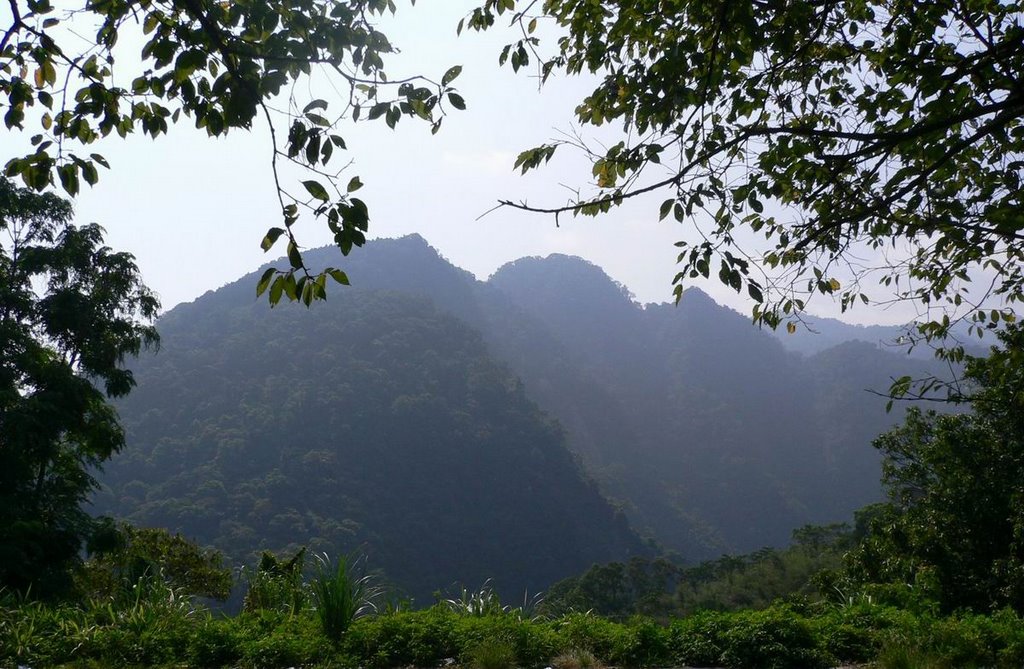 Ngasan na kneiring Eban在路邊有一塊地。七八年前,烏來溫泉剛開始旺的時候,他們家人設攤賣原住民食物。外面人來烏來投資溫泉,對當地人只有壞處沒有好處;設攤,原住民總可以藉人潮賺一點錢。不久,縣政府下令拆除路邊攤;原住民的攤子,全部拆掉,平地人的攤子原封不動,繼續營業。
蘇縣長的部署後來把這塊地鋪柏油,作小停車場,讓遊客免費停車。聽說沒問地主的意見,但細節我不清潔。恩恩怨怨姑不談,對面山巒風景很美吧:有圖為證。
但是有一個現象實在令我費解。偶有遊客停在停車場擺桌椅歇腳,有的泡茶,有的吃便當。可是六七年來,我每一次看到遊客坐那兒,他們的躺椅、登山椅、布椅等等諸如此類,一律背著風景,面向馬路看馬路旁的水泥擋土牆。我從來沒看過遊客的椅子面向山景。
我真不懂。他們很懷念都市的柏油、水泥嗎?那麼喜歡看來來往往汽車的話,何必到山上來?真不懂。
管它的,我自己看就好了。
可是讀者您萬一不小心到我們美麗的風景區的話,千萬記住規矩:都市人不准看山!!不可以看風景!!只准看汽車、柏油!!切記切記!!
Monday, August 21, 2006
收到了這麼一封email:
|||+++
八月26日剛好是星期六,那天大家可以到高一點的地方等到凌晨看月亮!
兩百七十二年後才會再出現一次,機會難得!請記下這一天並且不要錯過這次難得的機會。
從八月份開始,火星將會在晚上呈現出最明亮的時候。
>>>
從肉眼來看,它會像月亮那麼大。
>>>
繞著地球走了34.56英里(?似有誤)後,它的大小將在2006年8月27號達到最大。
在2006年8月27日淩晨00:30一定要觀看哦!那時天空會看上去有兩個月亮!
相同的景觀再出現將會在2278年。一定要轉發給你的朋友因為一旦錯過這次,我們沒有機會再次見到這樣的景觀了。
|||+++
真假對錯,我不敢說,但我敢預言,若此消息屬實,2006年8月27日淩晨00:30,烏來不是傾盆大雨,就是烏雲密佈。
等著瞧吧。
|||+++
八月26日剛好是星期六,那天大家可以到高一點的地方等到凌晨看月亮!
兩百七十二年後才會再出現一次,機會難得!請記下這一天並且不要錯過這次難得的機會。
從八月份開始,火星將會在晚上呈現出最明亮的時候。
>>>
從肉眼來看,它會像月亮那麼大。
>>>
繞著地球走了34.56英里(?似有誤)後,它的大小將在2006年8月27號達到最大。
在2006年8月27日淩晨00:30一定要觀看哦!那時天空會看上去有兩個月亮!
相同的景觀再出現將會在2278年。一定要轉發給你的朋友因為一旦錯過這次,我們沒有機會再次見到這樣的景觀了。
|||+++
真假對錯,我不敢說,但我敢預言,若此消息屬實,2006年8月27日淩晨00:30,烏來不是傾盆大雨,就是烏雲密佈。
等著瞧吧。
Friday, August 18, 2006
The Catholic Church has interesting priorities. Since at least the 7th century, kneeling has been part of the Catholic worship. That's fine, it shows respect. The people are worshipping, right?
I have not been following the dogma, but apparently now kneeling is considered wrong, so Catholics are not permitted to kneel in worship. Some believers prefer to kneel. Father Martin Tran of the Diocese of Orange, in Orange County, California, has stated that kneeling "is clearly rebellion, disobedience, and mortal sin.”
Mortal sin. Aren't their priorities wonderful? They should be happy people are coming to church at all, but instead, blind obedience is paramount. You'd think they might find other more pressing social problems to worry about, but no, obedience is most important.
Buddhists kneel a lot. I used to joke, How can you tell a real Buddhist? Have him kneel on cement for twenty minutes. If he rubs his knees when he stands up, he hasn't gotten into things yet.
But that was just a joke, and I never claimed it was a real rib-tickler. In Buddhist ceremonies, if you can kneel, so much the better, but if you don't want to, or don't have the strength, why, you just sit by the side. No big deal. It's where you heart is that's more important, not your knees.
The other joke. How can you tell a real Buddhist? By the calluses on his forehead.
I have not been following the dogma, but apparently now kneeling is considered wrong, so Catholics are not permitted to kneel in worship. Some believers prefer to kneel. Father Martin Tran of the Diocese of Orange, in Orange County, California, has stated that kneeling "is clearly rebellion, disobedience, and mortal sin.”
Mortal sin. Aren't their priorities wonderful? They should be happy people are coming to church at all, but instead, blind obedience is paramount. You'd think they might find other more pressing social problems to worry about, but no, obedience is most important.
Buddhists kneel a lot. I used to joke, How can you tell a real Buddhist? Have him kneel on cement for twenty minutes. If he rubs his knees when he stands up, he hasn't gotten into things yet.
But that was just a joke, and I never claimed it was a real rib-tickler. In Buddhist ceremonies, if you can kneel, so much the better, but if you don't want to, or don't have the strength, why, you just sit by the side. No big deal. It's where you heart is that's more important, not your knees.
The other joke. How can you tell a real Buddhist? By the calluses on his forehead.
Thursday, August 17, 2006
三貼
Three grade school boys were whooping it up as they zigged and zagged up the road on a motorcycle. No, it's not legal for ten year olds to drive motorcycles, but if the Legislators don't want Aborigine kids driving in their own village, let them come enforce their laws themselves.
They caught up with me again at the bridge. They came up behind me, riding on the sidewalk. I called out, "Hey, hey, hey, you aren't supposed to be riding on the sidewalk, you’re supposed to be on the asphalt! Your motorcycle is supposed to be on the black part of the road, on the black asphalt, not on the tiles on the sidewalk!”
One boy shouted back, "Yugan, don't you see? Some of the tiles are black. We are riding on the black tiles, not on the white tiles, so we are good little boys, we are doing just as you say, we are riding on the black part!”
Three grade school boys were whooping it up as they zigged and zagged up the road on a motorcycle. No, it's not legal for ten year olds to drive motorcycles, but if the Legislators don't want Aborigine kids driving in their own village, let them come enforce their laws themselves.
They caught up with me again at the bridge. They came up behind me, riding on the sidewalk. I called out, "Hey, hey, hey, you aren't supposed to be riding on the sidewalk, you’re supposed to be on the asphalt! Your motorcycle is supposed to be on the black part of the road, on the black asphalt, not on the tiles on the sidewalk!”
One boy shouted back, "Yugan, don't you see? Some of the tiles are black. We are riding on the black tiles, not on the white tiles, so we are good little boys, we are doing just as you say, we are riding on the black part!”
Tuesday, August 15, 2006
Napoleon's Birthday
City people lose the moon. Lights and signs and cars all eviscerate its brilliance. Not so in the mountains, removed from the light pollution our local government works so hard to effect. Even the waning moon of lunar 21st was enough to pull me from my pillow. I sat in the hammock, rocking gently, listening to the frogs, insects, wind, and the faraway roar of the stream. High overhead, a jet streaked due east. Much later, the sound arrived. I always get sentimental when I see jets flying through the night. The paling moon was no longer strong enough to wash the stars off the sky. Orion held his own. I covered myself with a light blanket, and rocked until sleep claimed me again.
City people lose the moon. Lights and signs and cars all eviscerate its brilliance. Not so in the mountains, removed from the light pollution our local government works so hard to effect. Even the waning moon of lunar 21st was enough to pull me from my pillow. I sat in the hammock, rocking gently, listening to the frogs, insects, wind, and the faraway roar of the stream. High overhead, a jet streaked due east. Much later, the sound arrived. I always get sentimental when I see jets flying through the night. The paling moon was no longer strong enough to wash the stars off the sky. Orion held his own. I covered myself with a light blanket, and rocked until sleep claimed me again.
Monday, August 14, 2006
Sunday, August 13, 2006
A bus driver once told me, if you're not confident in the driver, never ride shotgun, always sit behind the driver, because the driver will always turn the wheel to protect himself.
The road in from the city goes up gradually about a hundred meters in elevation in four kilometers of road, turns a corner, and drops 90 meters in less than one kilometer. 新烏路從新店升百公尺,過花園新城到伸丈板左轉劇降。
Friday afternoon someone was driving a big truck, not a flatbed, the kind for hauling gravel or sand, a big truck, towards Wulai. As soon as he turned that corner at 伸丈板and started coming downhill, he realized he had no brakes at all. Nothing. Fortunately, traffic was light and the driver was calm, cool, and collected, so he crossed to the other side of the road and started scraping the wall to slow himself down (mountain to the left, drop off to the right). He rode straight through a bunch of Taipower's transformers and smashed his truck into the edge of the supporting wall near 櫻花山莊. The entire front of the truck had a huge V in it. But he stopped himself before he lost control.
Quick thinking, if you ask me. The driver escaped unscathed. The 捆工\loader, sitting shotgun, suffered minor injuries, but he was trapped in his seat by the folded steel for several hours.
The road in from the city goes up gradually about a hundred meters in elevation in four kilometers of road, turns a corner, and drops 90 meters in less than one kilometer. 新烏路從新店升百公尺,過花園新城到伸丈板左轉劇降。
Friday afternoon someone was driving a big truck, not a flatbed, the kind for hauling gravel or sand, a big truck, towards Wulai. As soon as he turned that corner at 伸丈板and started coming downhill, he realized he had no brakes at all. Nothing. Fortunately, traffic was light and the driver was calm, cool, and collected, so he crossed to the other side of the road and started scraping the wall to slow himself down (mountain to the left, drop off to the right). He rode straight through a bunch of Taipower's transformers and smashed his truck into the edge of the supporting wall near 櫻花山莊. The entire front of the truck had a huge V in it. But he stopped himself before he lost control.
Quick thinking, if you ask me. The driver escaped unscathed. The 捆工\loader, sitting shotgun, suffered minor injuries, but he was trapped in his seat by the folded steel for several hours.
Saturday, August 12, 2006
Woman: Aren't your feet hot on the pavement?
Little barefoot boy: Yeah, but that's okay. The ground is really hot, too.
--Washington Square Park
via Overheard in New York, Aug 11, 2006
I really really like this.
Friday, August 11, 2006
I'm really mad at the biased liberal press. Vice President Cheney has not shot anybody for months, but do they report that? No they do not. They only focus on the negative. Why can't they say something positive for a change? Why do they hate America? How can we win the war on terrorism with such biased reporting?
Thursday, August 10, 2006
On July 2, 2006 on this blog I posted a piece about India and China. Today I would like to discuss something that perplexes me.
Over the last ten or fifteen years, I have been astonished, again and again, by the writing of Indian authors, especially women. They write in English with such clarity, beauty, skill, and style, that I am lost in admiration.
For an example, find if you can the August 2006 issue of the Smithsonian, and read their feature, The Last Page, this month an essay by Niranjana Iyer. This lighthearted piece, titled Weight of the World, is a nearly flawless gem. No matter how you look at it – tone, content, sentence structure, usage – it is an amazingly well written article (although I would quibble about a comma or two).
Now my question is, where did all this talent come from? Why are contemporary Indian women such good authors? Is there something in their psyche, in their social structure, in their schooling, what is it?
My impression of Indians has always been: verbose. An Indian will talk you to death. I consider myself a hardworking Buddhist, but I have to admit, especially with my background in Chinese literature, I get vexed by the loquacity of the sutras.
Sariputra uncovered his right shoulder and genuflected and pressed his palms together and said, Oh great Baghivata, Oh great Buddha, I have a question to ask.
The Buddha said, Yes, Sariputra, you have uncovered your right shoulder and you have genuflected and you have pressed your palms together, and now you will ask a question. This is very good, this is very good. Oh Sariputra, tell me, you have uncovered your right shoulder and you have genuflected and you have pressed your palms together to ask a question, so what is this question for which you have uncovered your right shoulder and you have genuflected and you have pressed your palms together?
Sariputra said, Oh great Baghivata, Oh Teacher, I have uncovered my right shoulder and genuflected and pressed my palms together to ask you a question, and the question which I have uncovered my right shoulder and genuflected and pressed my palms together, to ask is, Have you seen my glasses? I put them somewhere. I have looked for glasses everywhere. I have looked in the main meditation area, but my glasses are not in the main meditation area. I have looked in the place where we eat, but my glasses are not in the place where we eat. I have looked in the place where we take our rest at night, but my glasses are not blah blah blah, so I have uncovered my right shoulder and genuflected and pressed my palms together to ask Baghivata this question, have you seen my glasses?
And the Buddha said, Oh Sariputra, you have uncovered your right shoulder and you have genuflected and you have pressed your palms together to ask me where your glasses are. First, Oh Sariputra, let me remind you that life is ever in change, life is impermanent. Understand impermanence, oh Sariputra, and you will find a great truth of life. Your glasses came to the aid of your eyes, and eventually it is certain that your glasses will no longer aid your eyes, as the essence of the universe is impermanence.
Sariputra said, This is very good.
The Buddha said, But oh Sariputra, you say you can't find your glasses, so you have uncovered your right shoulder and you have genuflected and you have pressed your palms together to ask me, but first, oh Sariputra, let me ask you, What is the self that seeks these glasses? Are you aware of the self that feels the glasses should be found? Seek out that self, Sariputra, blah blah blah.
Sariputra shed tears and said, This is very good.
The Buddha said, Oh Sariputra, you say you can't find your glasses, so you have uncovered your right shoulder and you have genuflected and you have pressed your palms together, but have you looked on the top of your head? For there I see your glasses, oh Sariputra, blah blah blah for page after page.
At the other extreme lies the Chinese language, concise and compact, with not a syllable wasted. This is especially true of Classical Chinese, which may be the densest and most economical language there is. Many great poems are only sixteen or twenty words long. A long poem might run up to a couple hundred words.
My favorite model for good writing is 左傳, the Tso Commentary on Spring and Autumn, a Confucian work written say around the time of the Buddha. In that book, my favorite example of tight writing is the account of a rebellion in Chi which took place in 686 BC. The entire story of the rebellion, including plotting, motives, deep psychological insight, close portrayal of character, and all the action, is packed into just under three hundred words, of which about forty are names. 左莊八年傳:齊侯使連稱、管至父戍葵丘。瓜時而往。曰、及瓜而代。朞戍,公問不至。請代。弗許。故謀作亂。僖公之母弟曰夷仲年,生公孫無知。有寵于僖公。衣服禮秩如適。襄公黜之。二人因之以作亂。連稱有從妹在公宮,無寵。使間公。曰、捷,吾以汝為夫人。冬十二月。齊侯遊于姑棼,遂田于貝丘。見大豕。從者曰、公子彭生也。公怒,曰、彭生敢見!射之。豕人立而啼。公懼,墜于車,傷足喪履。反誅履于徒人費。弗得。鞭之見血。走出,遇賊于門。劫而束之。費曰、我奚禦哉!袒而示之背,信之。費請先入。伏公而出鬥,死于門中。石之紛如死于階下。遂入。殺孟陽于牀。曰、非君,不顓。見公之足于戶下。遂弒之而立無知。
(Of course this style of writing makes demands on the reader: THINK!)
In Indian writing, with three hundred words, the guy's just uncovered his right shoulder and started to genuflect. But read these modern Indian writers and shake your head in admiration. Where have they come from?
Over the last ten or fifteen years, I have been astonished, again and again, by the writing of Indian authors, especially women. They write in English with such clarity, beauty, skill, and style, that I am lost in admiration.
For an example, find if you can the August 2006 issue of the Smithsonian, and read their feature, The Last Page, this month an essay by Niranjana Iyer. This lighthearted piece, titled Weight of the World, is a nearly flawless gem. No matter how you look at it – tone, content, sentence structure, usage – it is an amazingly well written article (although I would quibble about a comma or two).
Now my question is, where did all this talent come from? Why are contemporary Indian women such good authors? Is there something in their psyche, in their social structure, in their schooling, what is it?
My impression of Indians has always been: verbose. An Indian will talk you to death. I consider myself a hardworking Buddhist, but I have to admit, especially with my background in Chinese literature, I get vexed by the loquacity of the sutras.
Sariputra uncovered his right shoulder and genuflected and pressed his palms together and said, Oh great Baghivata, Oh great Buddha, I have a question to ask.
The Buddha said, Yes, Sariputra, you have uncovered your right shoulder and you have genuflected and you have pressed your palms together, and now you will ask a question. This is very good, this is very good. Oh Sariputra, tell me, you have uncovered your right shoulder and you have genuflected and you have pressed your palms together to ask a question, so what is this question for which you have uncovered your right shoulder and you have genuflected and you have pressed your palms together?
Sariputra said, Oh great Baghivata, Oh Teacher, I have uncovered my right shoulder and genuflected and pressed my palms together to ask you a question, and the question which I have uncovered my right shoulder and genuflected and pressed my palms together, to ask is, Have you seen my glasses? I put them somewhere. I have looked for glasses everywhere. I have looked in the main meditation area, but my glasses are not in the main meditation area. I have looked in the place where we eat, but my glasses are not in the place where we eat. I have looked in the place where we take our rest at night, but my glasses are not blah blah blah, so I have uncovered my right shoulder and genuflected and pressed my palms together to ask Baghivata this question, have you seen my glasses?
And the Buddha said, Oh Sariputra, you have uncovered your right shoulder and you have genuflected and you have pressed your palms together to ask me where your glasses are. First, Oh Sariputra, let me remind you that life is ever in change, life is impermanent. Understand impermanence, oh Sariputra, and you will find a great truth of life. Your glasses came to the aid of your eyes, and eventually it is certain that your glasses will no longer aid your eyes, as the essence of the universe is impermanence.
Sariputra said, This is very good.
The Buddha said, But oh Sariputra, you say you can't find your glasses, so you have uncovered your right shoulder and you have genuflected and you have pressed your palms together to ask me, but first, oh Sariputra, let me ask you, What is the self that seeks these glasses? Are you aware of the self that feels the glasses should be found? Seek out that self, Sariputra, blah blah blah.
Sariputra shed tears and said, This is very good.
The Buddha said, Oh Sariputra, you say you can't find your glasses, so you have uncovered your right shoulder and you have genuflected and you have pressed your palms together, but have you looked on the top of your head? For there I see your glasses, oh Sariputra, blah blah blah for page after page.
At the other extreme lies the Chinese language, concise and compact, with not a syllable wasted. This is especially true of Classical Chinese, which may be the densest and most economical language there is. Many great poems are only sixteen or twenty words long. A long poem might run up to a couple hundred words.
My favorite model for good writing is 左傳, the Tso Commentary on Spring and Autumn, a Confucian work written say around the time of the Buddha. In that book, my favorite example of tight writing is the account of a rebellion in Chi which took place in 686 BC. The entire story of the rebellion, including plotting, motives, deep psychological insight, close portrayal of character, and all the action, is packed into just under three hundred words, of which about forty are names. 左莊八年傳:齊侯使連稱、管至父戍葵丘。瓜時而往。曰、及瓜而代。朞戍,公問不至。請代。弗許。故謀作亂。僖公之母弟曰夷仲年,生公孫無知。有寵于僖公。衣服禮秩如適。襄公黜之。二人因之以作亂。連稱有從妹在公宮,無寵。使間公。曰、捷,吾以汝為夫人。冬十二月。齊侯遊于姑棼,遂田于貝丘。見大豕。從者曰、公子彭生也。公怒,曰、彭生敢見!射之。豕人立而啼。公懼,墜于車,傷足喪履。反誅履于徒人費。弗得。鞭之見血。走出,遇賊于門。劫而束之。費曰、我奚禦哉!袒而示之背,信之。費請先入。伏公而出鬥,死于門中。石之紛如死于階下。遂入。殺孟陽于牀。曰、非君,不顓。見公之足于戶下。遂弒之而立無知。
(Of course this style of writing makes demands on the reader: THINK!)
In Indian writing, with three hundred words, the guy's just uncovered his right shoulder and started to genuflect. But read these modern Indian writers and shake your head in admiration. Where have they come from?
Subscribe to:
Posts (Atom)


