真了不起!多年來最大一次雷震雨:房子震動,安全起見我還拔了一些電器的插頭,免得房子被震、電器燒壞。這是經驗:雖有避雷針,電力太強。幸虧沒事。可真壯觀!
Friday, July 11, 2014
Thursday, July 10, 2014
Approaching his teens, Prince Ethelwulf was
a naughty, sassy boy. One day, he gave the Royal Witch a bit too much lip, and
she turned him into a toad. Actually, Prince Ethelwulf enjoyed hopping around
in the mud, catching flies with his tongue, as would any high-spirited boy. However,
an important ceremony was approaching, and it just wouldn’t do to have the
Prince hopping around the Royal Chamber catching flies, so the King asked his
neighbor, King Edwy, to send over his daughter Princess Osburh to break the
spell. Cursing her luck under her breath, Princess Osburh dutifully kissed the
toad prince, and Prince Ethelwulf was restored to his former condition.
But not for long. Once again he got the
Royal Witch’s hackles up, and she turned him into a toad again. This time,
however, His Majesty immediately ordered the Witch to turn him back into a
prince, much to Prince Ethelwulf’s disappointment.
The King summoned the Prince, and said to
him, “We have ordered our Witch to turn you back into a Prince because, my son,
you shouldn’t have to be toad twice.”
Monday, July 07, 2014
三十年前,跟臺灣學生說,「你可以進步」,他們發奮圖強。
十五年前,跟臺灣學生說,「你可以進步」,他們當耳邊風。
現在,跟臺灣學生說,「你可以進步」,他們就不高興:我已經很完整,憑甚麼說我有進步的空間?
§
我在課堂上沒閒功夫講解教育理論:我是老師,你相信我就不會錯。我向來不準學生上課查字典,甚至教準留學生不要隨身攜帶字典:會障礙進步。
一直到兩、三年前,一個大學生上課查字典,我說:「課堂上不準查字典。」繼續講課。
第二天,他媽咪打電話來投訴,說我叫她兒子不要查字典,她兒子受傷了。
§
我們補習班暑假開SAT班,小留學生從世界各地回來準備考試。上課都用英文講。
那天開新班,跟學生講規矩,說課堂上不要用手機: “On the one hand, if you have your phone
on, it means you're not concentrating on the material. On the other hand, how
do you like it, when you're concentrating and trying to learn something, and
you hear the person next to you saying, 「我現在上課,晚一點再打電話給你」? It ruins your concentration, right? We’re
here to concentrate and learn something, not phone. So no phones in class.” 馬上有學生滑手機傳line跟媽咪說,老師講中文,媽咪馬上打電話來教務處投訴,老師上課講中文,不是全英文教學嗎?罵的很凶。
我有三個疑問。第一,我不是在說上課不要用手機?你幹麼line給媽咪?
第二,也許學生只覺得新鮮,媽咪抓住機會過度反應,亦未可知。
第三,那堂課,我講解字彙時,舉法、德、俄、拉丁文的例子,媽咪沒投訴。第二節知道有家長投訴我還故意舉排灣語的例子,看媽咪會不會投訴,可是沒有。所以結論是,全世界的語言都可以說,就是不準說中文。媽咪覺得講中文很可恥嗎?
§
某國立大學的學生叫老師改變教學法,還威脅老師說,「我們背後有三十幾個家長。」
§
為甚麼我這一代的人當父母那麼失敗?
Saturday, July 05, 2014
When
I see photos of people doing their “open carry” thing >>LINK<<,
I wonder, why are these people so afraid that they have to tote
around their firearms?
When
I was 17, I was running all over the Viet Nam war zone (from the
Delta to the DMZ), through areas where everybody knew there were North Viet
Namese regulars, in known VC villages, past firefights, explosions, the usual stuff of wars, and I
was never so frightened that I felt I had to carry a gun. Maybe I'm
just dumb. But to me, these open carry people look like cowards.
Would
the gun people be so enthusiastic about open carry if African
Americans and Hispanics also exercised their rights to carry around
their guns? >>LINK<<
In
the summer of 1974, when I was 21, I worked on a volunteer project with a bunch of
VN college students to rebuild a school in Quang Tri destroyed in the
fighting. It was about 100 meters from the border with North Viet
Nam. At night, we could hear the drumming of their psychological
warfare troops, and we could see the gun flashes and artillery flashes of
fighting in the nearby hills. We were told to sleep fully clothed and
shod, with our documents in our pockets. Every night after we lay
down to sleep, our leader told us, "Remember which direction South is.
If anything happens, get up and run south, just run, don't ask
questions, don't stop, just run south."
But
I was never so frightened that I felt I needed a gun. Why are these
people so frightened that they can't put down their firearms?
Sunday, June 29, 2014
Saturday, June 28, 2014
June
28, 1914, exactly one hundred years ago, the Serbian terrorist, Gavrilo
Princip almost by accident had the opportunity to shoot the Austrian
Arch Duke. He did and this kicked off the First World War, which led
to the Second World War, with more than a hundred million people
dead.
Meanwhile,
my computer has been down, but is back on its feet. Kicking and
screaming, it is working with me again.
Wednesday, June 18, 2014
Friday, June 13, 2014
Friday, June 06, 2014
Wednesday, June 04, 2014
Monday, June 02, 2014
If you aren’t feeling depressed about your job or the
economy, then read this piece: even if you are:: LINK
Sunday, June 01, 2014
There’s some good news after all. Meriam
Ibrahim, the lady in Sudan
who was sentenced to death for being Christian will be freed. Congratulations
all around. Let’s wait until she walks free to be sure, but it’s still good
news.
I am quite sure that the government of Sudan
was influenced by yesterday’s post on this blog.
Yeah, sure.
Saturday, May 31, 2014
Yes, yes, yes, we know that Islam is the
religion of peace, but this is outrageous. A Christian woman in Sudan , married
to a Christian, has been sentenced to death because her father is Muslim,
although her mother is Christian. Since her father is Muslim, her Christian
faith is disregarded and her Christian marriage has been annulled by the court,
so she has also been sentenced to 100 lashes for adultery. Good old religion of
peace, huh?
Friday, May 30, 2014
我來華學中文年代,曾一時流行大學生背高中書包。當然要背建中、北一女、中一中之類名校的書包;板橋高中、彰化高中的沒人背。
(板橋高中的名聲是流氓學校)
來華的外國漢學家跟進,當然要背建國中學書包,偶而有人喜歡「成功」就背起成功中學書包;女漢學家只有一兩個,不用問:北一女。
可我不想。往昔臺灣買不到好背包,而書包確實好用,我就想。好了,和平東路溫州街口有人賣書包。(注:從國際學舍到和平東路,沿著瑠公圳走,圳溝邊的樹多,但是不好走,東側很多雜亂小房子,稍微比較好走,到了和平東路右轉,和平東路左右各一車道,兩邊矮房子裏騎樓下各種商店。)我買了一個沒字的軍綠色書包,帶回國際學舍,磨墨提筆,上面很仔細寫:
學小鬼洋
(?右到寫左從,洋崇麼那誰?好不好,左而右從是字國)
自格兒覺得字不錯,很滿意,從此背著上街。
有意料不到的效果:路人的反應。很嚴肅、道貌岸然的外國學者背建國中學,司空見慣,一個野小子背起這個「洋鬼小學」,很多大人不知道該如何反應。多數人裝做沒看到,有人看到欣然一笑。
也有好心人,很體貼問,「書包上面的字,你看懂嗎?」
「我自己寫的,當然看懂。」
于是有人釋懷笑,但大部分人更加困惑。
Wednesday, May 28, 2014
A fascinating new look at human evolution: “essential
molecules had changed even more rapidly in human muscle than in the brain. The
rate of change in muscle was 10 times that seen in our closest animal cousin,
the chimpanzee.
In contrast, the molecules in the human
brain had evolved four times faster.
The scientists believe human muscle needed
to alter drastically to free up energy for the brain becoming puny.“
For the complete article, please click
HERE.
Monday, May 26, 2014
Friday, May 23, 2014
Hurray for Franc e !
They bought new trains to upgrade their train service.
One slight problem: somebody forgot to measure things, and it turns out that
the trains are just a few centimeters too large to fit into the stations. Not a
big problem, only 1300 stations. I’m sure they can remedy this minor glitch with a bit of grease
on the sides of the trains.
Thursday, May 22, 2014
Wednesday, May 21, 2014
從前讀歷史,到魏晉南北朝就搞不清楚:魏篡漢、晉篡魏、八王之亂、中華自亂、五胡亂華、華亂五胡、五胡戶亂、亂亂亂,實在搞不清楚。
共產主義在中華名存實亡,年輕學者擺脫馬恩思想的枷鎖;在歷史,新秀日出,作品成山,成就沛然,這幾年讀他們的作品,魏晉南北朝終于開始理出頭緒。
那是一個燦烈的時代:時代、人物燦爛、悲烈,一點也不令人嚮往,但使我想提筆。其中太多太多精彩的題材:都需要人寫短篇、長篇、劇本、電影展示他們的事跡:尊重地詮釋他們的時代、他們的抉擇、他們的人生。光是慕容家族故事就說不完。羊后的心態很需要探索,可以寫成上等的作品。原來毛寶不是洗衣精,是橫行戰場的勇將。蘇峻幾杯酒改變了歷史,司馬炎立太子壞了晉朝。秦王苻堅的帝國版圖大于盛漢,出征淝水于時為世界歷史最大規模軍事行動,一馬跌而局勢顛倒。十六歲的梁敬帝遶著床逃命,喊「本不願為皇帝,陳霸先推我即位,如今將殺我!」而死于刀下,又一個年輕皇帝(忘了哪一位)為權臣所弒,臨死只求來世不生帝王家。石勒從奴隸成為帝王、劉裕本為無賴的孤兒卻篡晉立宋。阬人、食人,常有的事,人民怎麼活?整個家族記憶中沒過過安寧的日子,怎能活下去?
韋孝寬、達摩祖師、侯景、宇文泰、高歡、佛圖澄、高敖曹、苻生、石虎、好人壞人幾簍筐,都用他們的生命、他們的智慧、愚蠢、遠見、盲點、熱血、冷血寫出燦烈的歷史,躍然紙上。
但其中,幾乎不必點綴而自成最完美的故事,就是嵇康。「康早孤,有奇才,遠邁不群。身長七尺八寸,美詞氣,有風儀,而土木形骸,不自藻飾,人以為龍章鳳姿,天質自然。恬靜寡欲,含垢匿瑕,寬簡有大量。學不師受,博覽無不該通,長好老、莊。」與魏宗室婚,而他二十四歲時攜眷離洛陽索居山陽竹林,阮籍、山濤也來了,有那麼燦爛的一年多,留下竹林七賢的美名,供後人摸索。隨君追思、質疑、叱笑、仰慕。「康居貧,嘗與向秀共鍛於大樹之下,以自贍給。潁川鐘會,貴公子也,精練有才辯,故往造焉。康不為之禮,而鍛不輟。良久會去,康謂曰:『何所聞而來?何所見而去?』會曰:『聞所聞而來,見所見而去。』會以此憾之。及是,言于文帝曰:『嵇康,臥龍也,不可起。公無憂天下,顧以康為慮耳。』因譖康」,文帝不容,加之罪賜死。往刑場,三千太學生出來請拜為師;太學生壞事,文帝認為臥龍不可起,必死不赦。康顧視日影,索琴彈「廣陵散」,曰:「廣陵散于今絕矣!」時年四十。
嵇康之死,于其人于其時,實悲,但為候人留下最完美的故事,不撰而為上品。
嵇康嘆,「廣陵散于今絕矣!」其實是他個人的版本;曲譜記音,但詮釋由個人。曲譜未佚,隋朝找到曲譜,唐代流行民間,宋高宗時收入宮廷,而明代編入「神奇曲譜」,流傳至今。
聽吧,紀念嵇康、竹林七賢、南北朝芸芸眾生。
Monday, May 19, 2014
Sunday, May 18, 2014
When we got home, I went out back to feed
the dogs. A large field mouse was scampering back and forth between the dogfood
buckets and the tool rack. I called Byajing and Yumin, intrepid hunters. They
wagged cheerfully, ignoring the field mouse. Finally, after considerable
coaxing, Byajing went over and sniffed perfunctorily under the rack. Yumin checked
the place too.
I have a feeling a conversation was going
on, beyond my ken.
Byajing: Hey, Qoli, we told you not to come when Yaba has come home.
Qoli: I know, but you promised me I could play with your toy sticks tonight.
Yumin: Not now, Qoli, get out of here and come back when Yaba has gone
indoors and turned off this light.
Qoli: Well, okay, but I’ll be back after you finish eating.
Byajing: No problem! Now, scoot!
Friday, May 16, 2014
明遺民船山王夫之著「讀通鑑論」,亦可名「讀通鑑吹毛求疵集」,歷代好人、壞人,通通劇罵。船山筆下,無完人,苛察而無已。尤恨外族,或以其生于明末,眼見滿清入關。
船山卻問:「君子之求于人也,可以苛察而無已乎?」下文云「事是君而為是君死,食焉不避其難,義之正也。」
臣不死君難,船山甚不饒人,筆征墨伐。
但是:船山生于明末,眼見滿清入關,其父親、二兄、叔父均護明抗清陣亡,而船山獨活。雖組民起兵,但不了了之;明朝有難,船山何以不死?苛求諸人,至己身則不論。
人,最容易認出自己。一個人一直罵、不饒人、口出惡言,往往就是看到自己。或許船山惡言詈罵前人的不是,實為自責。
今臺灣政事,極少就事論事、計及子孫、為社稷謀福,只有怒吼、毒罵。怒吼的人,是發洩內心的不平?抑或看到自己?
Thursday, May 15, 2014
現代教育不重視詩,一則學校教育功利,能賺錢的科目家長才願意讓孩子上。然一則現代詩已離詩本位:失去詩意,寫長短句,跟散文沒兩樣,只有排版不同,詩的意境已無,則何需為詩?
請看看第十四屆台北文學獎的首獎作品LINK。這給你人生的啟發嗎?感動嗎?半夜睡醒,會在你心中裊裊,喚起人生幽趣的憧憬嗎?
Poetry is being neglected in today’s
schools, which are geared to producing efficient money making machines. LINK
Part of the problem lies with modern
poetry, much of which has lost touch with its muse. All you have to do is plop
down some artistically arranged sentences on a page and you’re in business. IMHO,
people read poetry to be informed of new worlds, to be moved. You’re not
getting that with a poem published recently that had a verse saying:
T T T T T T T T T T T T
and so forth. I may not be quoting exactly,
but is that something that would haunt your dreams?
Tuesday, May 13, 2014
恭喜拉阿魯哇、卡那卡那富的自我定位收到官方認同。
一方面,覺得要分就分不完,我們都是人,管你膚色青紅皂白,管你說甚麼語言,我們都是人,何必細分?但另一方面,確認自己的位置、自己的祖先、很重要。
恭喜他們正名,是為了這個。
唯一遺憾:鄒族人數又變少了!
Congratulations to the Kanakanavu and Saaroa(ɬaʔalua), who have won recognition as being separate
tribes. They have long been grouped with the Tsou (Cou), but their languages
are quite different. Each of these newly recognized tribes has about 500
people.
LINK
LINK
Friday, May 09, 2014
The NRA will tell you to be proud: this
proves that Americans have better aim.
The raw numbers tell you something, but not
everything, because not all countries have the same population. How many people
are killed, proportionately?
In Japan , 1
out of 2,600,000.
In the UK , 1 out of
8,000,000.
In Switzerland , 1
out of 235,000.
In Canada , 1 out
of 6,700,000.
In Israel , 1 out of 132,800.
In Sweden , 1 out of 434,000.
In West Germany , 1
out of 1,200,000.
and in the US ,
1 out of 29,000. We WIN!
Let’s make the competition a bit stiffer:
Russia has about 5,000 gun deaths a year out of a population of 142,500,000, so
that gives them only 1 in 28,500, so you can see Americans have to work harder!
We are losing the Death Race! But only by a little, so go out there and get
your kids guns so they can do the patriotic thing and pop someone off.
We are still way behind Jamaica , Swaziland ,
and the Honduras , but let’s
concentrate on overtaking Russia
first.
If it’s any consolation, we still have a lot more people incarcerated
than any other country in history.
Tuesday, May 06, 2014
The idea that guns can protect liberty in
the computer age is either pathetically naïve or disgustingly disingenuous.
Now you can get your six year old a color coordinated rifle that shoots real
bullets and can kill real people. >>LINK<< They ought to work on
that scope, though. Can’t they make a pink one, to go with the gun?
If you want a gun, okay, but you ought to
be required to prove you can handle it responsibly, just like you need a driver’s
license before you can legally drive. Nobody needs a tank in his garage, and
nobody needs an assault rifle at home. Leave those to the professionals.
Saturday, May 03, 2014
Friday, May 02, 2014
Saturday, April 26, 2014
There are several dialects of the Tayal
aborigine language. As my dear departed friend Baunay so succinctly explained
it, “When you hear people who talk roughly and sound like savages, you know
they are from the next village over.” Yes indeed.
In Miaoli the main dialect is C’uli, but in
Wu lai Squliq is spoken. The names of
the dialects come from the different pronunciation of the word “person:” c’uli
in Miaoli, squliq in Wu lai. People
can communicate, but there are some real curveballs. Here are a couple
examples:
house→ c’uli: sali; squliq: ngasan.
fish→ c’uli:
sioh; squliq: quleh.
year→ c’uli: kawel; squliq: kawas.
And I can barely understand the c’uli
numbers. At the kindergarten, I would tell the kids to come sit with me, tama
kani, to be met with blank looks. It turns out that in C’uli, they say tl’ung
ani. No wonder.
Friday, April 25, 2014
怎麼那麼巧!在苗栗泰雅部落遇到阿里山來吉部落的Eleng Nguia (LINK)。晚上火邊彈虜布,她說自己做了兩個,拿出來讓我彈,還給我選一個送我!感謝!It’s a small world. In Bwan, who should we run into but Eleng Nguia
from Pnguu (LINK). In the evening I was sitting by the fire playing the lubu
(aboriginal bamboo jaw harp). Eleng said she had made two, and let me choose
one as a gift. Many thanks!
Thursday, April 24, 2014
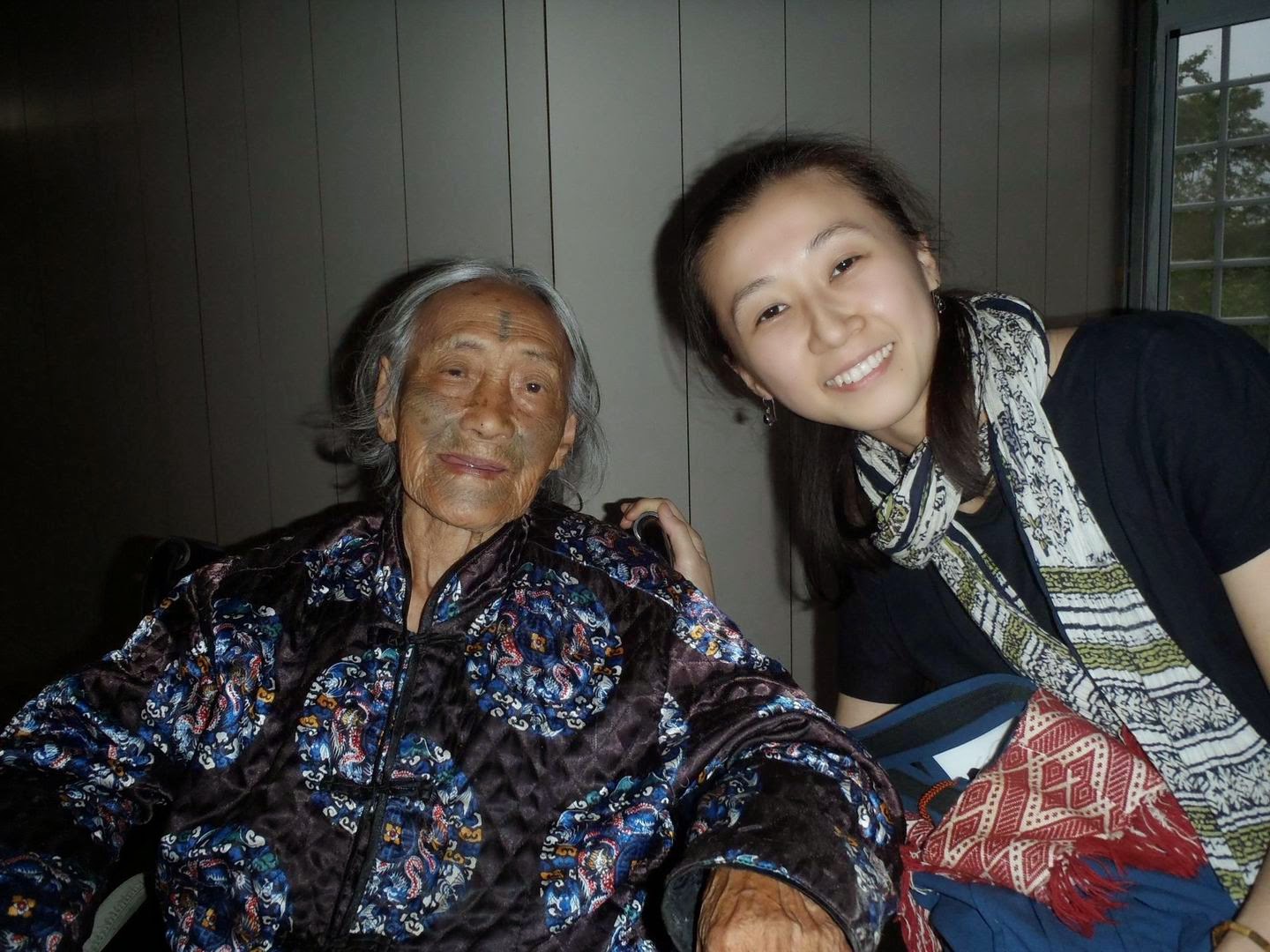
番石榴部落的泰雅語幼兒園請撒毖去給老師、家長介紹動作元素,我當然跟去。路上我們被導航騙到深山羊腸小徑──中象道路──好在撒毖開車技術一流。上到海拔一千零八十公尺,沿途風景美麗、竹筍叢生、名符其實的「坎坷」路況。好不容易到了,我們到天狗拜見一百零九歲的文面國寶,yaki Lawa。她講純正的C’uli達彥,我講半調子的Squliq達彥,但是聊的很開心。The Tayal language kindergarten in Mbwan village invited Sabiy to
give the teachers and parents a class in the elements of movement. Of course I
went along.
The GPS led us off onto a rambling, twisting road up to 1080 meters and back
down. Beautiful scenery, horrible road conditions. Fortunately, Sabiy is a
great driver, so we finally arrived safely. We went to visit the 109 year old
yaki Lawa, one of the last with traditional facial tattoos. She speaks elegant
C’uli Tayal, I stumble along in broken Squliq Tayal, but we had a wonderful
chat.
Earlier visit:: LINK
Tuesday, April 22, 2014
Monday, April 21, 2014
Sunday, April 20, 2014
Mencius said, If the heavens decide great
things for you, first your television is turned off, your FaceBook is closed,
your computer is shut down, your cell phone is taken away, so that no nonsense
clutters up your heart, to bore you to death, so you can really start to live
your life.
~from FaceBook, Gmoz Aquamarine.
Tuesday, April 15, 2014
Several times on this blog I have written
about the small group of Jingpo from Yunnan
who live in Taiwan
>>link<<.
Recently Professor Taimu of the Nat ional
Taipei University
of the Arts has been studying the munao, an important Jingpo dance. Not only
studying but also leading his students in the dance. He got in touch with me, and
we arranged for Zit Khung hang sau, chairman of the Taiwan Jingpo Association,
to give a talk at the school and lead the students in a dance: the first time
they had seen a real, live Jingpo! A merry time was had by all.
景頗來臺五十年的鄉愁、孤獨,難以忍受;與家鄉聯繫全斷,只聞浩劫不斷:大躍進、破四舊、文化大革命,家人生死不明,祖先文化不彰。解放軍咆哮血洗臺灣,
小兵守住崗位,死守臺灣,怎敢奢望與家人相會?臺灣雖然逃過劫數,生活安全,但日見「浩瀚中國文化」淘他們少數民族的根。好不容易成親生子,只見在臺景頗
的第二代徹底漢化,「景頗」只是老爸口中的一個詞。
五十年來,每次被問起家鄉,自稱「景頗」,很少人聽過,更沒有人想再問。自將祖傳當寶,但為世人所棄。多年的教訓,他們認為不會有人對他們的文化有興趣。
近日國立臺北藝術大學的鍾教授研究景頗的目瑙縱歌,也帶學生跳。他與我聯絡上了,我們請在臺景頗會的孔會長到學校介紹景頗文化、帶學生跳目瑙。孔會長得知有人對景頗有興趣、還跳目瑙,喜出望外,不敢相信。我們到北藝大之前,他一再問我,他們要跳舞給我們看嗎?他們要教我們跳舞嗎?
目瑙跳完,我們去吃飯、送會長到臺北車站,他一再說,「今天很快樂、很快樂。」
Sunday, April 13, 2014
Friday, April 11, 2014
Wednesday, April 09, 2014
星期天晚上在中山堂聽了一場…很特別的演奏,「臺灣原民古調與非洲部落戰鼓」,多吸引人的!桑布伊與雲力思兩位的演唱,錯過一次,絕不能再錯過!
入堂看,ㄟ,怪,舞臺擠的滿滿的,好多椅子。一回兒,臺北市立國樂團上臺了,另配六個大提琴、四個低音大提琴、豎琴等等。他們演奏了一個非常前衛的樂曲,打破你對國樂的囿限:你以為國樂要有旋律嗎?和音?節奏?錯了!他們演奏的曲子聽不出旋律,主題、音準、節奏的枷鎖也打破了,他們就力力啦啦好久好久,證明了國樂器可以發出各種你不習慣的聲音。
終于演完了。幾位布農青年站出來了,排好,開口,唱出了臺灣山林的靈,很多觀眾眼眶馬上紅了。聽完第一個前衛國樂曲子,感覺滿身蚊蟲叮,布農歌唱好比澆了一桶涼爽山泉水,全身舒暢。接著八部合音,那麼簡單真實,感人啊!
非洲鼓響了,桑布伊、雲力思、少妮瑤、少浪即興,音被鼓聲壓過。只好等下半場。
中場休息看節目單,很訝異,第一首曲子名為「靈橋」!怎麼可能?這是hongu utux na Tayal泛泰雅的靈橋?我一點也聽不出達彥的壯烈、喜笑、直樸、大方!我假想,如果我們部落的耆老聽了,會感到認同嗎?一笑:我想,如果給我乾爸達利聽了,跟他說是靈橋,他一定會揮拳打人。
下半場開始,國樂團又上臺了,舞臺擠的滿滿的,今天全團到齊沒有人請假!雲力思、桑布伊、少浪出來,站舞臺最前面,幾乎沒地方站。
這是一個很勇敢的嘗試,國樂配原住民歌曲。但出了兩個問題:第一,原住民歌可以獨立,配樂根本是多餘的,他們唱就好了,不需要伴奏。第二,聽不到!國樂團太多人,聽不到原住民的聲音!你想,光是大提琴就六個,怎麼能聽到那幾位唱歌呢?國樂團如果只派七八個樂師上臺,還勉強可以。
排灣的少妮瑤,小小一隻,吹了好大一枝鼻笛(桑布伊的鼻笛租金兩百五的話,這枝少說要四百五!),幸虧沒伴奏,所以聽得到,音樂玄妙多變,亙古遼闊,有機會聽真是福氣。
雲力思、桑布伊是世界寶級的歌喉,但對不起,幾乎聽不到,被國樂團壓過。
這晚上的演奏意料未及。但最後,我想,其實他們這個演出也反映了臺灣的事實:舞臺被中國文化佔滿了,原住民擠到一邊,雖然努力唱優雅的古調,但是聽不到他們的聲音。
On Sunday night, we went to a “A Dialogue
between Ancestral Spirits: Taiwanese Aboriginal Folk Tunes vs. African Drumming.”
I originally dismissed the vs. as a typical Taiwan misuse of the word, which
some suppose to mean ‘and’, but soon learned that they really did mean versus.
I was surprised to see the stage full of
chairs. Soon the Taipei Chinese Orchestra filled the stage, and brought along
six cellos, four basses, a harp, and other Western instruments.
They commenced to play a very avant garde
piece to break down your preconceptions of Chinese music. You thought Chinese
music was supposed to have a melody, a rhythm, some sort of structure? Wrong!
They proved that you can play classical Chinese musical instruments without any
regard to tune, theme, or harmony. They produced all sorts of unusual sounds
for a very long time and finally stopped. The audience, totally mystified,
politely clapped.
A group of young Bunung in traditional
dress strode onto the stage, took their positions, and the lead singer opened
his mouth. Out poured the purity and power of Taiwan ’s mountains; many eyes in
the audience were full of tears. After the interminable nagging of the
orchestral piece, the Bunung brought freshness and relief. They sang their
famed eight part harmony, simple in structure but endlessly moving.
The African drums came into play, in an
improvised dialogue with Inka Mbing (Tayal), Sangpuy Katatepan Mavaliw (Pinuyumayan),
Sauniaw Tjuveljevelj (Paiwan), and Sawlang (Amis). The drums won.
During the intermission, I looked at the
program and was astonished to read that the orchestral piece was an
interpretation of Tayal spirit. I heard nothing in it that even remotely
reminded me of gaga na Tayal/Tayal spirit. I imagined what would be the
reaction of tribal elders to this piece: they would probably find nothing to
resonate with. I smiled to think what the reaction of my tribal father, Dali,
would be: he’d probably punch someone.
The Chinese Orchestra took the stage again,
leaving a thin edge for the aborigines to sing on. This was a brave attempt to
join Chinese music with Aboriginal singing, but failed on two parts. First,
aboriginal singing stands alone, and has no need for orchestral accompaniment. Second,
there were two many Chinese musicians, so you could barely hear the aborigines.
Inka and Sangpuy have voices that are
global treasures, but you could barely hear them over the accompaniment.
Friends sitting in the first row and in the balcony all had the same complaint,
so it wasn’t our seats. There were just too many people in the orchestra. If
they had pared it down to seven or eight musicians it would have been better.
Sauniaw, a delicate little Paiwan,
performed on a huge nose flute,fortunately with no accompaniment. I have
never heard the nose flute played with such mastery. A performance to relish!
All told, the concert was certainly not
what I expected. But looking back, I think it did portray a fact of life in Taiwan . The
stage was jam packed with Chinese culture which drowned out the thin line of
aborigines singing their hearts out.
Sunday, April 06, 2014
這張以前鋪過,但今天找到另一張比較清楚,重新掃。這張好處是看得到路標:新生南路信義路口,時為民國六十一年七月。右邊那棟是國際學舍,我住二樓。再旁邊是國際學舍體育館,當時在臺灣算是蠻大型的公共場所。
國際學舍的這邊是紅土網球場。這一帶現在全部是大安森林公園。那時臺灣的腳踏車都是這種重機型,連三擋變速也無。
路邊迷彩碉堡現在很少見,再注意看路邊小棚子,就是久已不見的車票停。可以買車票(一張一塊五)、報章雜誌、香煙甚麼的。安全島上圓車牌,站名路線都是手寫的。
A
couple years ago I posted a different version of this photo elsewhere, but
today I found this copy. I like it because you can see the street sign better:
the corner of Hsin sheng and Hsin yi, now Da’an Park. I took this in July 1972.
The building on the right is the International
House, where I lived, and the building to its right is the I House Gym, which
was at the time one of Taipei ’s
larger public spaces. In the foreground is a red clay tennis court. In those
days, all bicycles were clunkers, you couldn’t even find a three speed. You don’t
see many camouflaged pillboxes by the road anymore. Looking down Hsin yi
Street , you can see a small booth, the likes of
which have totally disappeared. That was a ticket booth, where you could buy a
bus ticket (NT$1.5), newspapers, magazines, smokes, what have you. On the
island you can see a round busstop sign; all the stops and routes were written
out by hand.
Saturday, April 05, 2014
如果將「黑箱」講成black
box,聯想到飛機,在政治上比較沒有這個用法。如果講backroom deals,那是美國人很熟悉的東西,因為如果沒有黑箱,民主政治不能運轉。
話到此,突然想起初中公民老師講一七八七年製憲會議,很強調,雖然正值Philadelphia的炎夏,但代表堅持為了保密,門窗緊閉,拉上冬季禦寒的厚重窗簾,免得民眾知道他們的議論。說穿了,多數代表尚未到現場時,大體上已經定了方案,但是還是有很多問題需要討論;如果「透明」,代表有顧忌,不得暢所欲言,不能試探,不能改變立場。代表們立場雖然相違,但最後還是成功地立憲。我還記得老師多麼崇敬他們的智慧。
立憲後就選舉,成立國會。第一屆國會才開了幾週就停滯了,沒辦法運轉,新政府面臨崩潰。太多問題在臺面上無法解決,議員用黑箱,很快政府又上軌道了。
姑且不論好壞,黑箱效率高;民主政治的性質就是低效率,如果沒有黑箱,往往無法做事。所以對美國人來講,黑箱作業既不陌生又不排斥:算是necessary evil,衡量輕重,總比眼睜睜地看政府解體好。
請問,服貿與吃飯,哪一個比較貼近日常生活?哪一個比較複雜?當然吃飯貼近日常生活,服貿複雜多了。
上館子不看廚房,大家都懂。你點了菜,如果堅持要廚房透明,一定要進廚房看廚師怎麼做菜、用甚麼料、這個料有沒有最低標進貨、廚師買鍋碗瓢盆是否跟廠商有親屬關係等等,餐廳能營業嗎?做不下去。廚師有廚師的考量、習慣、做法;東西好吃、價錢合理、衛生及格,我們不必管太多。
且不論這項服貿合不合理:據了解,國際上服貿協議一律採取黑箱作業,這不是從臺灣大陸這裏開始的,是美國多年來倡導的做法。且不論黑箱合不合理,這是慣例,臺灣如果要繼續在國際上生存、繼續做貿易,必須面對這個事實。
Thursday, April 03, 2014
歷史上,販官鬻爵是衰敗的不二預兆。美國最高法院將國家推上這條路。In a move to destroy American democracy, the Supreme Court has
abolished limits to campaign contributions.
The decision may make some sense legally, in that you could say rich people’s
buying elections is within their rights, but I rather naively thought that the
Court should be protecting democracy.
It is no news that the Court sitting now is
for sale ==link== but this is blatant.
Tuesday, April 01, 2014
One day when I was about seven (Peter would
have been eleven, Steff thirteen or so) we three kids were in the car, Mom
driving. As we pulled up to a red light, we kids noticed a roughneck standing
by the road: a really nasty looking guy about twenty, in a black leather
jacket. You didn’t see types like that in Ottawa ,
Illinois . We stared. Mr Plugugly
noticed our attention and started glowering at us, so of course, Peter, being
Peter, flipped him off. Mr Plugugly didn’t like that, so he stomped over to our
car and started banging on the top. Mom, totally out of it, asked, “Why is he
banging on our car?” The light had turned, and all three of us said, “Moooom,
let’s get out of here! Let’s go, let’s hit the road, vamoose, let’s beat it,
LET’S GOOO!” She finally got the hint and pulled away, leaving the gentleman in
the black leather jacket shaking his fist at us.
As we drove away, Mom mused, “I wonder why
he did that.” Before she thought, the words were out of Steff’s mouth: “Peter
flipped him the bird.” Mom was intrigued. “Flipped him the bird? What does that
mean?” Steff bit her tongue. “Ahhhh, it means to shake your fist at someone.” “Oh
really? How interesting.”
Always eager to show off something new, Mom seized her chance a few days later
when a group of ladies came to pass the time of day. “I was so upset with the
man in the grocery store that I flipped him the bird.”
In the astonished gap that swallowed up the rest of the conversation, Steff had
no choice but to drag Mom into another room and tell her the true meaning of
the expression.
Saturday, March 29, 2014
Tuesday, March 25, 2014
臺灣履薄冰、臨深淵,必須謹慎、步步穩固,避免千古恨。
要民主嗎?民主是法制,法制重程序、證據。
警察打人的照片被撤。我電腦技術不好,我無法追究是哪個駭客撤的。我可以猜測,但我沒有證據。
誰撤照片,箭頭向馬政,但有證據嗎?馬政有動機嗎?
在國際上,警察打學生,司空見慣,常有的事,新聞價值不高(君不見去年U C
Davis警察用胡椒粉噴示威學生,法院還給造事警察三萬元美金精神賠償;南方警察看到大學生晚上在路邊跑,開槍打死,沒事)。馬政沒有必要撤照片。馬政應該知道在世界輿論上打學生沒甚麼,但是干預言論自由──尤其在臉書──事情就大條。他們不需要給自己背這個黑鍋。
但是問,照片是馬政撤的?我只能回答:不知道。
可能是政敵要嫁禍,知道大家會怪馬政,也未可知。我個人懷疑是記者所為。記者可以推翻垃圾桶,甚至動手打人來製造新聞;唯恐天下不亂的臺灣記者也很可能撤照片、捅蜂窩、營造熱鬧畫面來報導。我這樣想,但是我沒有證據。
犯罪現場的人有嫌疑:多少人在網路上?每一個都可能撤照片,可是有沒有動機?搞不好是哪一個網卡一個駭客技術很強的高中生鬧著玩的撤照片,來看熱鬧。是不是這樣?我不知道。
你要說是馬政撤照片,可以,但請拿出證據給我看。我的想法偏向民主、法制。
Monday, March 24, 2014
學生不該離開立法院。他們在立法院已經成為一個基地,被承認被默許,有屋頂擋風躲雨,有牆護著。
學生讀書沒讀兵法。人在牆內,外人進不去,引到牆外,才能下手。
悲。
可是我真的很想知道:一,馬英九這幾天到底在做甚麼?二,馬英九認為一個總統的職責是甚麼?
遲來的文章:link
Sunday, March 23, 2014
終于完成一個心願:做了一隻竹筒琴(阿美族傳統樂器,如今幾乎已經失傳了)。很可惜,最後竹子裂了,但現在知道怎麼做,可以再接再厲!Today I finally finished making my first tiftif: this is an Amis
musical instrument that has almost been forgotten (and the Amis are a tribe of Taiwan
aborigines). Unfortunately, in the final stages the bamboo split, but now I have
figured out how to make them, and more will come.
Friday, March 21, 2014
Friday, March 14, 2014
Wednesday, March 12, 2014
Monday, March 10, 2014
Sunday, March 09, 2014
民國六十一年春夏,我住國際學舍,在信義路、新生南路口。年輕外國遊客來臺差不多都住那裏。一位叫Phred的加州遊客來臺灣玩兩三週,發現臺灣正在放他半年前在加州看過的影片,他想在臺灣再看,一定有趣。當時臺灣還不富裕,國外看完的電影,才輪到臺灣來看,所以比加州晚半年,差不多正常。加上技術問題,35mm影帶在國外放過幾百次,來臺灣已經襤褸,畫面很多白點黑線,加上斷了再補,補了又接,順序錯亂,淫穢片段刪剪,經過遍體鱗傷的音響設備,約翰偉恩聽起來比較像兔寶寶,所以在臺灣看外國片,常給人一種「語無倫次」的感覺。但是Phred想看,義不容辭,我們國際學舍幾隻老鳥答應帶他到西門町看。但是我們叮嚀再三,影片前會放國歌,一定要站起來立正,不可以亂動,以示敬意,因為民眾以國歌為榮 ,不立正示敬,觀眾會罵:「怎麼可以不尊敬我們的國歌?」講了好幾次,Phred說他不會忘記。好了,我們買好票、爆米花也買了、擠進了窄小坑坑洞洞的座位。我們跟他講,爆米花盡量不要掉地上,以免引老鼠來吃。
坐了幾分鐘,燈暗了,破舊的喇叭放出動人、威武的音樂,Phred跳起來了,立正,脊椎筆直,雙手貼大腿,頭高眼直,臉上的表情嚴肅、敬重:「黑松汽水~~~」。我們忘了跟他說國歌前會先放廣告。後來真的放了國歌,他說已經沒有那股靈感,感覺不到熱血澎湃。
In early 1972, I was living in the long-gone, little-lamented International
House, home for the various and motley foreigners studying Chinese and the even
more various and more motley young foreign travelers passing through. One young
stalwart, Phred from LA, was spending a couple weeks in Taiwan , and
noticed that a movie was playing that he had seen six months before in LA. Since
Taiwan
was still poor in those days, we got movies after everybody else had seen them,
so a six month lag was about right. Add in technical issues: a 35mm film that
had been played hundreds of times was ragged by the time it got to Taiwan, with
white spots and black lines meandering all over the screen. Most had broken and
been patched, the censors chopped out the dirty parts. The sequence was usually
juggled about in the process. The speakers were always on their last legs, so
John Wayne came out sounding more like Bugs Bunny. All together, watching a
foreign movie in Taiwan
always left you wondering what the heck the film had been about.
But Phred wanted to go, so a couple of us I
Housers figured it was our duty to take him down to the fire trap in West Gate
where the movie was showing, sort of. But we drilled it into Phred: Before the
movie, they play the national anthem, and you have to stand straight without
wiggling or fidgeting. People were proud of their national anthem, and if you
showed insufficient respect, the audience would be displeased. Phred promised
he would remember, and assured us that he could stand up straight, that part he
could do, no problem. So we got our tickets, got our popcorn, squeezed
ourselves into our narrow, bumpy, uncomfortable little seats, and waited for the
show. We warned Phred not to drop any popcorn on the floor, lest it attract
rats.
The lights dimmed, and out of the hoarse
speakers flowed stirring martial music. Phred was on his feet in a flash, his
body ramrod straight, his hands straight down at his sides, his head held high,
eyes straight forward, with a solemn look of respect on his face: the Haysong
Soda Pop song. We had forgotten to tell him that they run ads before the
national anthem, and hauled him back down into his seat.
When the national anthem came on, Phred
stood at lackluster attention. He said the inspiration was past, the passion
spent.
But after the show, he agreed that the movie didn’t make
any sense at all.
Saturday, March 08, 2014
I am rereading Peter Raby’s excellent
autobiography of Alfred Russel Wallace. Which is beside the point. What
interests me today is, with a name like Peter Raby, did the author, from a
tender age, get called Peter Rabbit? It seems pretty natural to me.
Think of the family. How many of their dogs
were shot? “Look at that dog.” “Oh, that’s the Rabys’ dog.” Bang.
How do you cope with a name like Raby? “Who
are your neighbors?” “The Rabys live next door to us.” “Oh my!”
“I hear you are having company for dinner.”
“Yes, the Rabys are coming.” “Well, be sure to get inoculated.”
Truly it is said, Reading broadens a person. I would never have
thought of these predicaments had I not picked up this book.
Subscribe to:
Posts (Atom)